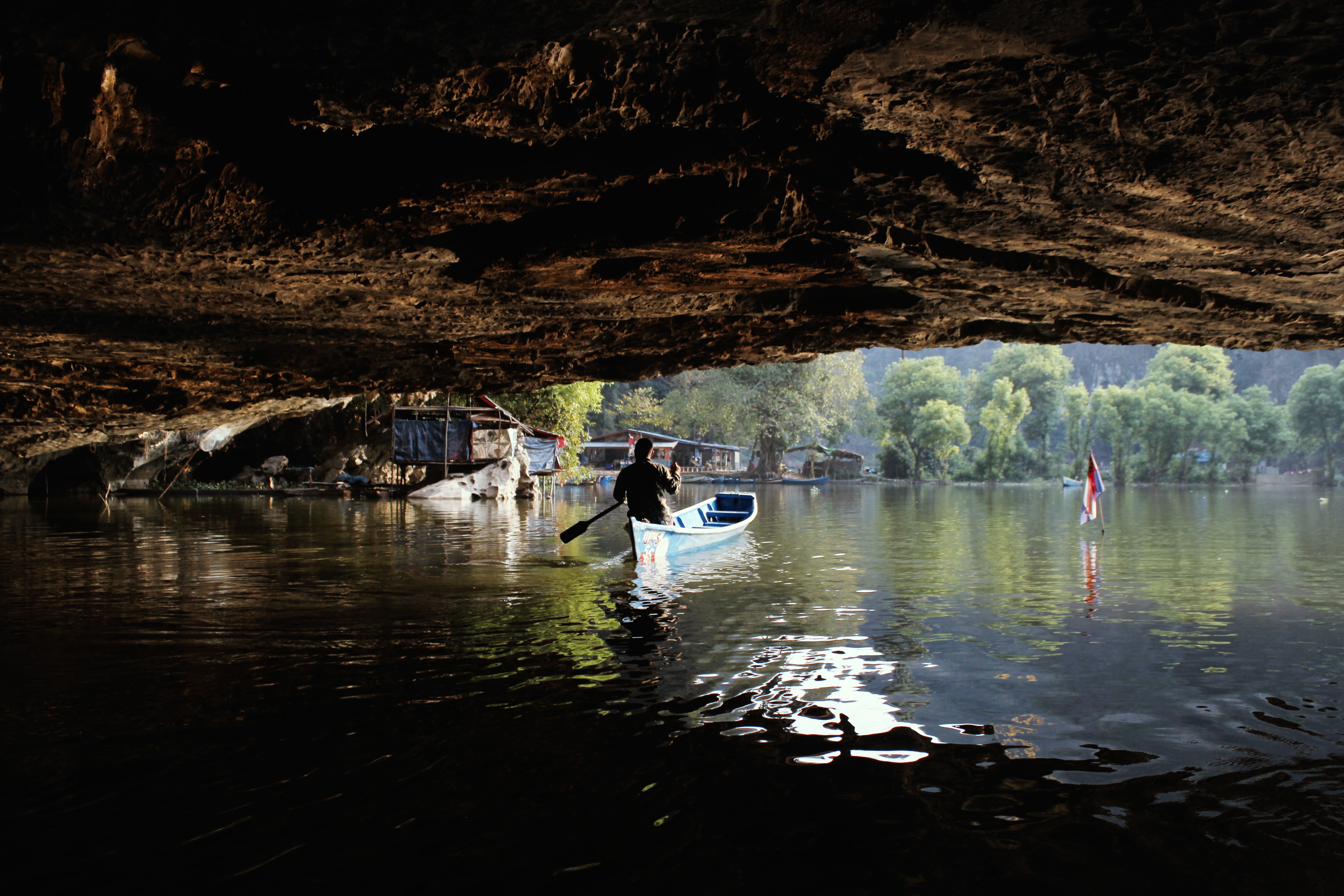
The People
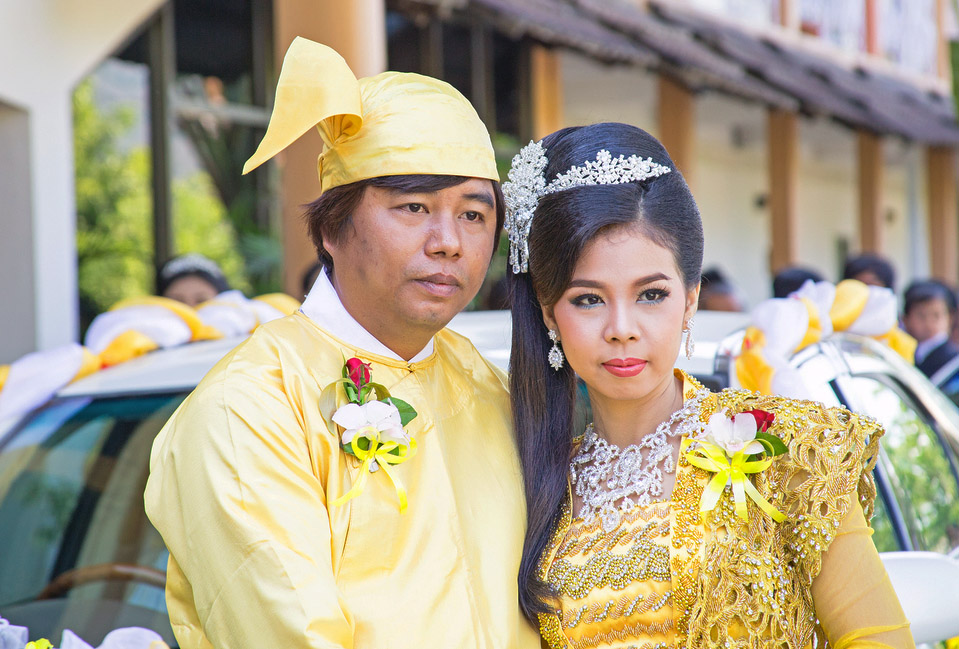
Myanmar’s majority group (around 40 million people, or two-thirds of the population), the Bamar have traditionally held sway over much of the country, particularly the fertile central plains and Ayeyarwady valley. Originally migrants from the southern China, the Bamar (or “Burmans”, as they were known in colonial times) were a wet-rice farming people, Theravada Buddhist by religion, whose tonal, Tibeto-Burman tongue – Burmese – has long been the national language.
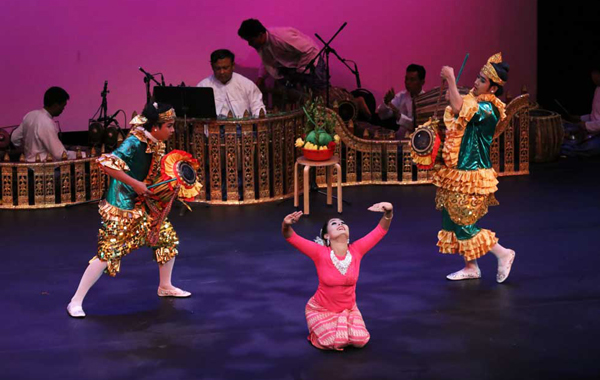
All-night performances, which combine melodrama, slapstick, traditional dance, and even pop music are called "zat pwe" in Burma. These seasonal events are staged in enclosed temporary bamboo theaters and are typically part of annual fund raising activities at pagoda festivals. The performers are traveling troupes, usually several dozen professional male and female dancers, musicians, comedians, and actors. These troupes travel widely throughout the country.
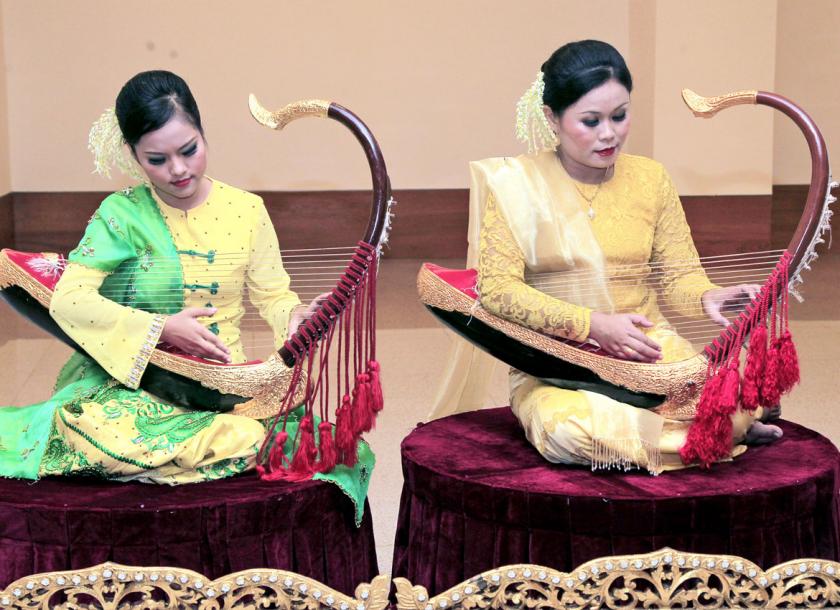
Traditional music from Burma is melodious, generally without harmony, and usually in 4/4 time (na-yi-se) or 2/4 (wa-let-se) or 8/16 (wa-let-a-myan). There are "the segments combined into patterns, combined into verses, combined into songs [that] make Burmese music a multileveled hierarchical system...The Burmese musician manipulates the various levels of the hierarchy to create the song..."
MANDALAY
Mandalay Region is an administrative division of Myanmar. It is located in the center of the country, bordering Sagaing Region and Magway Region to the west, Shan State to the east, and Bago Region and Kayin State to the south. The regional capital is Mandalay. To the south of the region lies the national capital of Nay Pyi Taw. Mandalay Region is important in Myanmar's economy, accounting for 15% of the national economy. It is under the administration of the Mandalay Region Government.
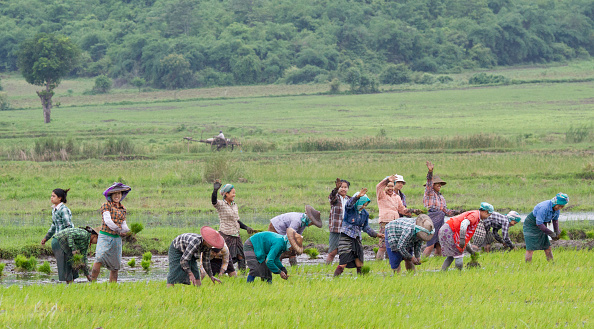
Agriculture is the primary economical source of livelihood. Primary crops grown within Mandalay Region are rice, wheat, maize, peanut, sesame, cotton, legumes, tobacco, chili, and vegetables.
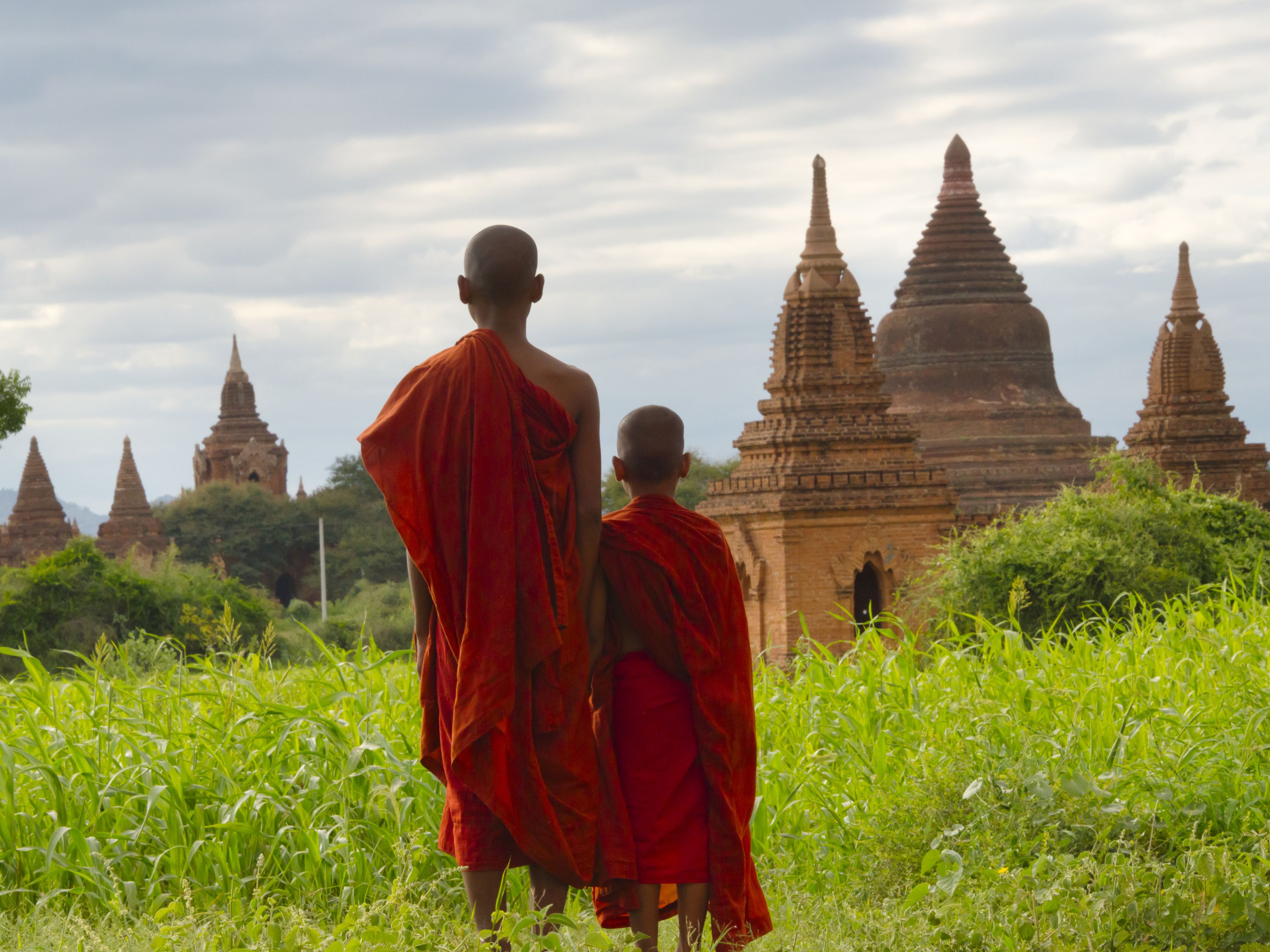
The majority in Mandalay region follow Theravada Buddhism.

The majority in Mandalay, Bamar people speak Burmese, a Sino-Tibetan language.
U-Bein Bridge
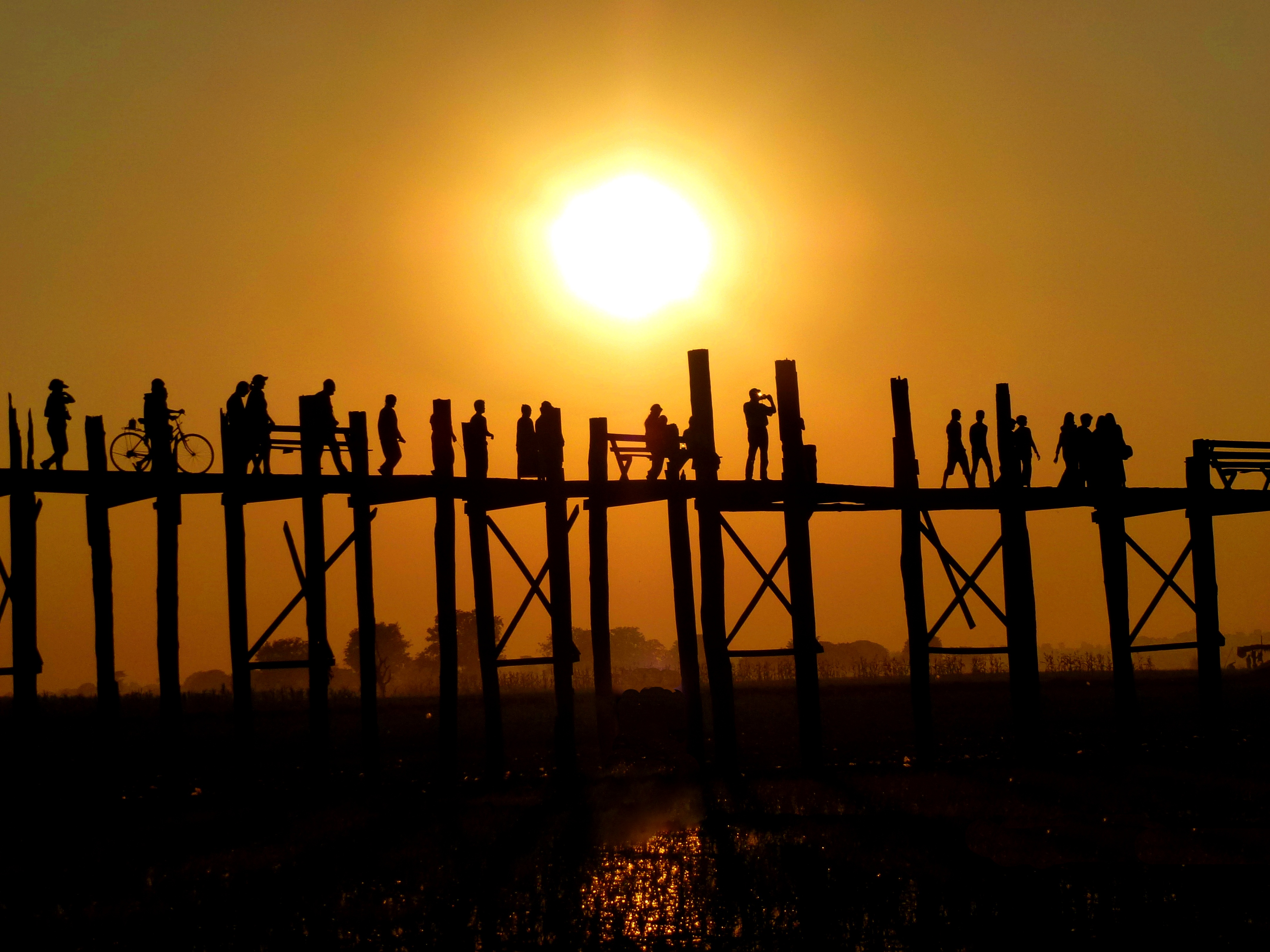
The world’s longest teak footbridge gently curves 1300yd across shallow Taungthaman Lake, creating one of Myanmar’s most photographed sites. In dry season it feels surreally high and mostly crosses seasonal vegetable gardens, but after the summer rains, the area becomes a big lake and water laps just below the floor planks. A handful of the 1086 poles on which it stands have been replaced by concrete supports. A great time to visit the bridge is just after sunrise when hundreds of villagers and monks commute back and forth across it. The light is often best around an hour before sunset, but by then it will be swamped with busloads of tourists. However, while the bridge gets extremely busy and shops hawk trinkets and souvenirs, the views can still feel surreal and the atmosphere, while far from serene, is unique.
Mandalay Palace
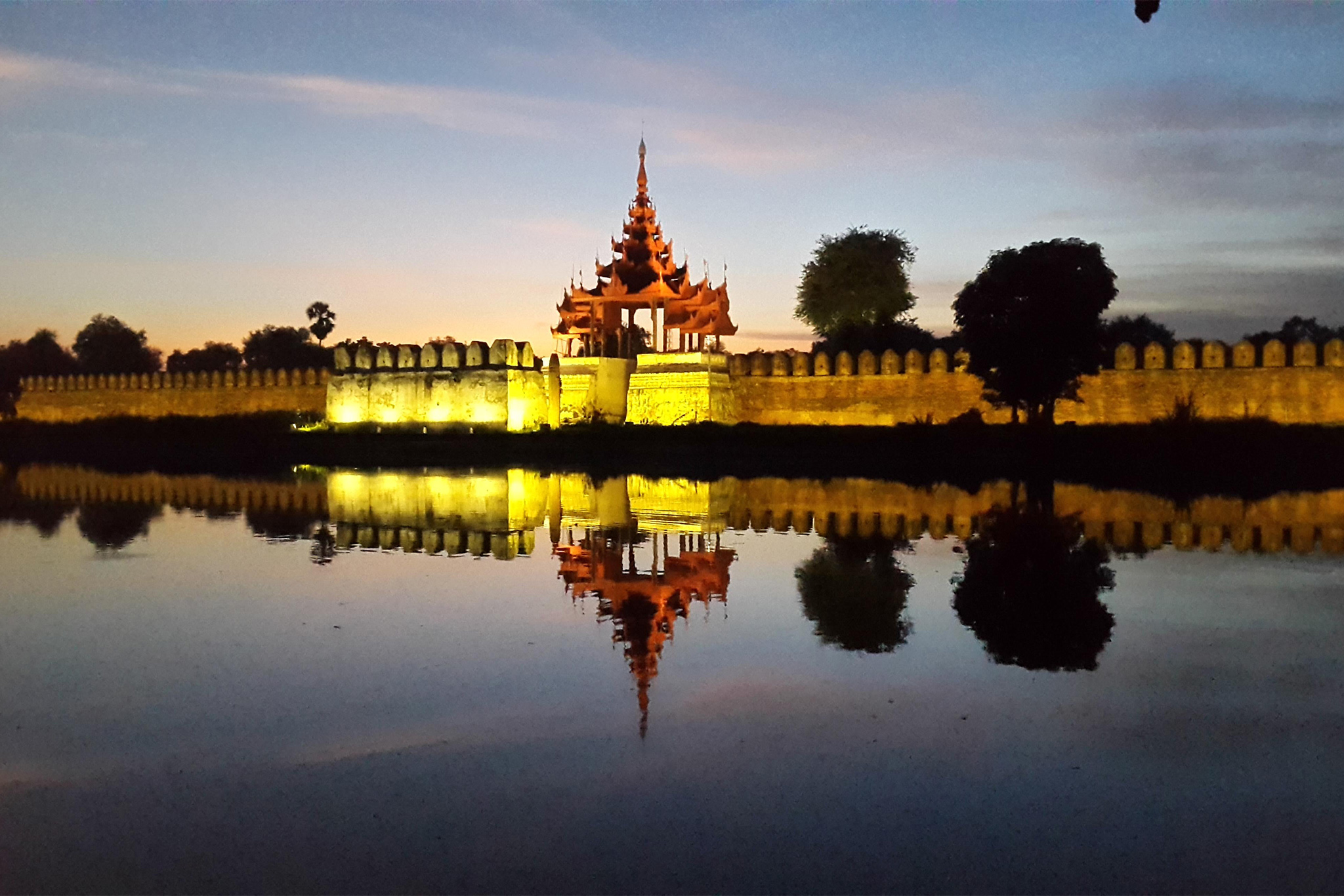
The 1990s reconstruction of Mandalay's royal palace features more than 40 timber buildings constructed to resemble the 1850s originals. Climb the curious spiral, timber-walled watchtower for a good general view. The palace's most striking structure is a soaring multilayered pyramid of gilt filigree above the main throne room. Parts of the complex are in need of repair. Palace access for foreigners is only via the east gate, and you may be asked for ID. If cycling or motorcycling, you must dismount as you pass through the gate and, due to army sensibilities, all visitors are required to stay on the direct access way and palace loop road. From this road you can see (but technically should not approach) the tomb of King Mindon, a large drum tower, sheds containing more than 600 stone inscription slabs and a small aeroplane on some rocks in the trees.
Bagan
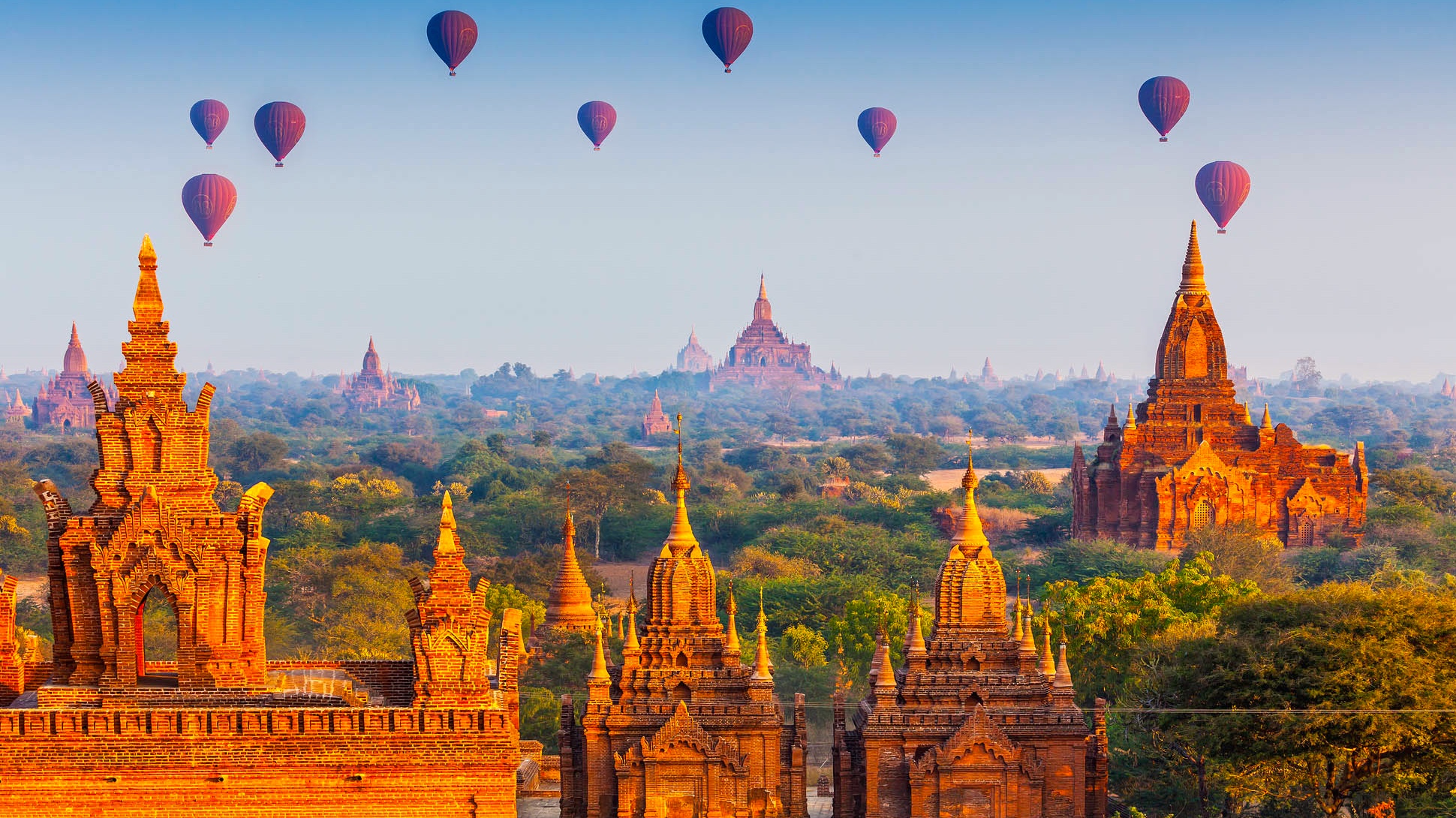
Lying on a bend of the Ayeyarwady River in the central plain of Myanmar, Bagan is a sacred landscape, featuring an exceptional range of Buddhist art and architecture. The seven components of the serial property include numerous temples, stupas, monasteries and places of pilgrimage, as well as archaeological remains, frescoes and sculptures. The property bears spectacular testimony to the peak of Bagan civilization (11th -13th centuries CE), when the site was the capital of a regional empire. This ensemble of monumental architecture reflects the strength of religious devotion of an early Buddhist empire.
Mount Popa
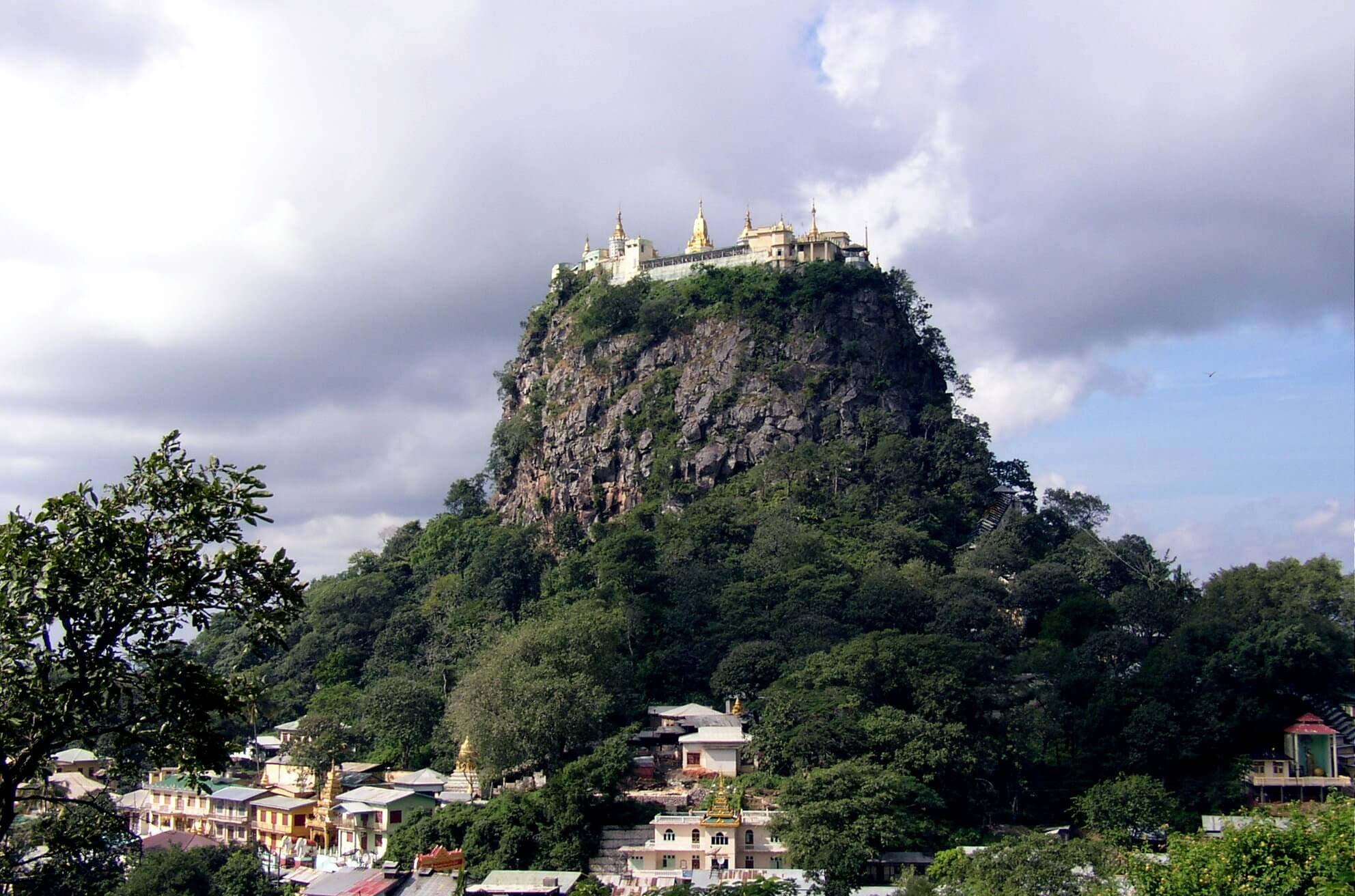
Mt. Popa is about 50km away from Bagan. It takes about 45 minutes drive from Nyaung Oo Airport, Bagan. Mt. Popa is an extinct volcano that is estimated to have erupted for the final time, over three hundred and twenty thousand years ago. However, popa’s attraction today lies not so much in its geological aspect, but more in its religious and mystical interests which are still prevalent. Popa is popularly recognized as an abode of many "Nats". H.L. Chhibber in his publication "The Igneous Rocks of the Mount Popa Region", described it as "being in all respects an ideal example of a recently extinct volcano, suitable for text-book illustration. The main mountain originally had a circular crater, but the whole of the north-western side was blown away, probably by the final paroxysmal outburst, which suggests that the last eruption must have projected its discharge inclined to the sides of the volcano in that direction.
Mandalay Hill
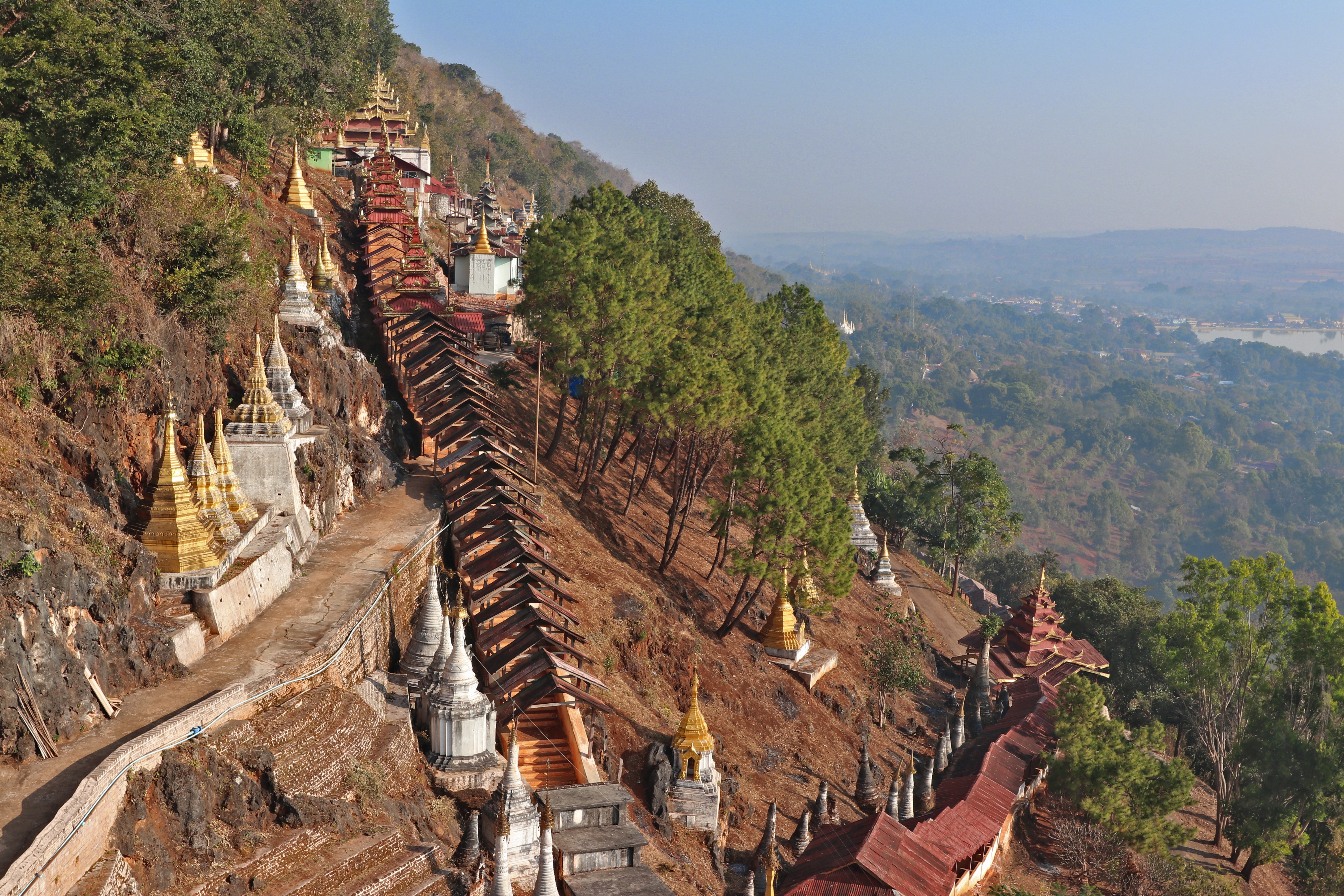
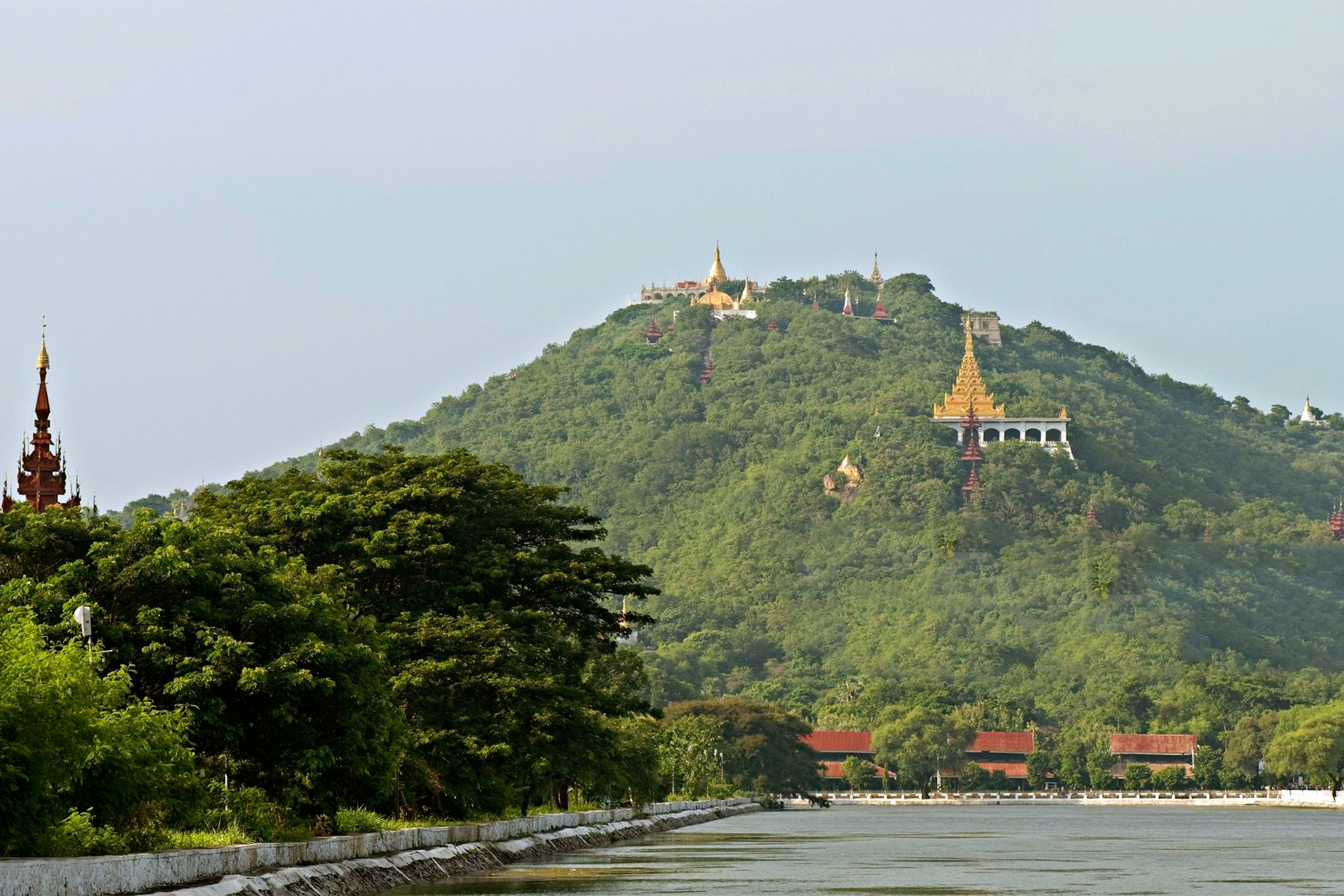
To get a sense of Mandalay’s pancake-flat sprawl, climb the 760ft hill that breaks it. The walk up covered stairways on the hill's southern slope is a major part of the experience – note that you'll need to go barefoot in places, as you pass through numerous temples and pagodas. The climb takes 30 minutes, but much longer if you allow for stops en route. The summit viewpoint is especially popular at sunset, when young monks converge on foreigners for language practice. It's possible to drive most of the way up Mandalay Hill. From the upper car park, both a lift and an escalator tower should be able to whisk you up to the hilltop. However, as both are often broken you'll probably need to walk the last five minutes on stairways. From 10th St at 68th St, shared pick-up route 16 (per person K1000) shuttles to the car park. Motorcycle taxis typically charge K3000 up and K2000 down (even though the down route is much further due to a long one-way loop).
Local Specilities
Traditional Costume
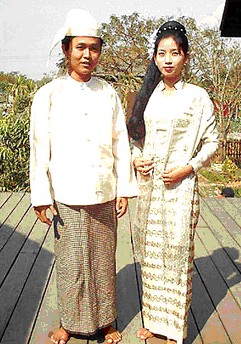
Bamar men dress in longyis, shirts without collars and traditional jackets. They also wear ready-made turbans with a wing-cloth standing to the right. Bamar women wear longyis and blouses with an opening in the front, which are buttoned either in the centre or on the side. They wear their hair in top-knots and drape lace shawls.
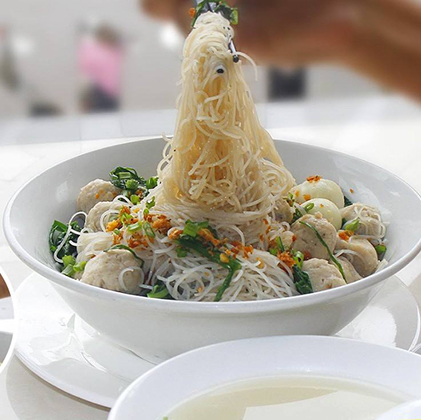
Kyay Oh (pork and egg noodle soup)
Kyay Oh is one of the best Mandalay foods that you should eat initially in your Mandalay tour as soon as arrival at the city. First invented by Chinese, it has been through a long time that has become a popular noodle soup of Burmese people traditionally made with pork and egg.
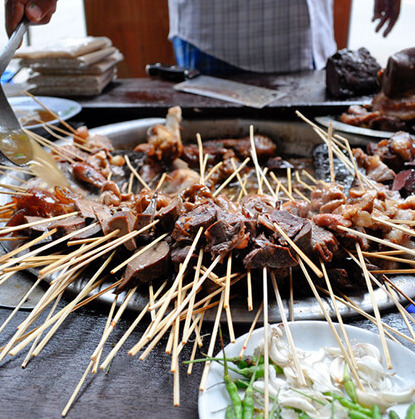
Wat Thar Dote Htoe (pork stick)
Being a famous street food of Myanmar which is cooked with soy sauce, pork stick is what to eat next in Mandalay. You will get a bit surprised because the pork stick is not just included in meat but come from many internal organs of the pig such as lung, heart, intestine, kidney, tongue, etc.
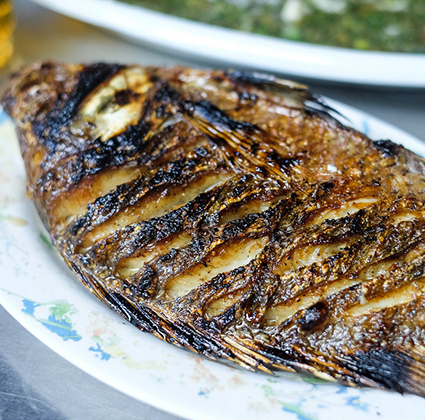
Lemon Fish
One more awesome food in Mandalay that you should order immediately! A fresh fish is steamed with garlic and tangy lime. It such an appetizing dish that totally satisfies even the most demanding one. The sweet, tangy, sour, and little spicy making it incredibly delicious.