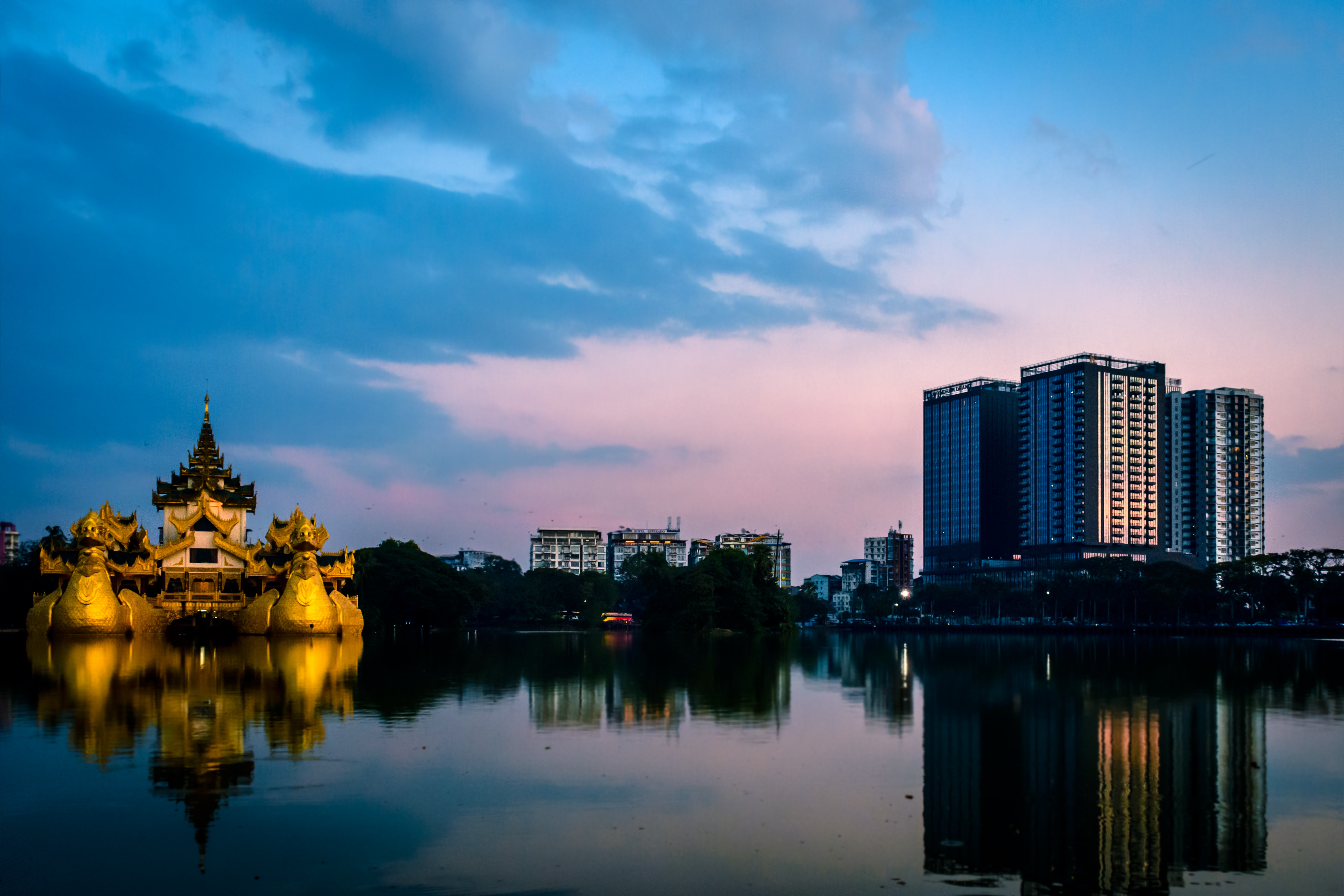
The People
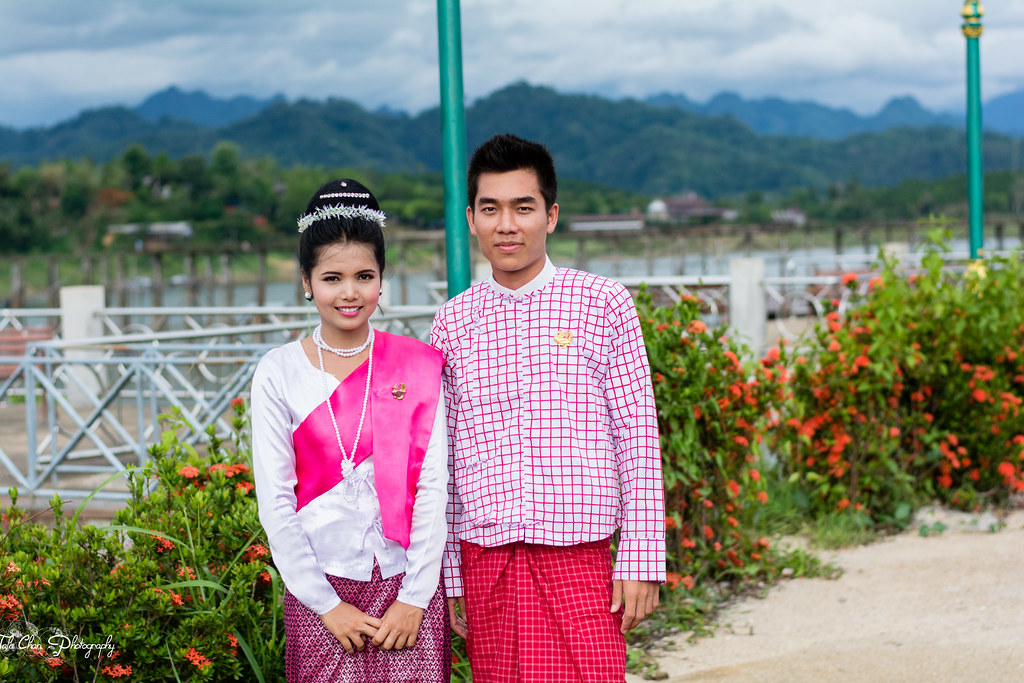
Mon people are an ethnic group from Myanmar (formerly known as Burma), living mostly in Mon State, Bago Division, the Irrawaddy Delta, and along the southern Thai-Burma border. One of the earliest people to reside in Southeast Asia, the Mon were responsible for the spread of Theravada Buddhism in Myanmar and Thailand. The Mon culture is credited as a major source of influence on the dominant Myanmese culture.
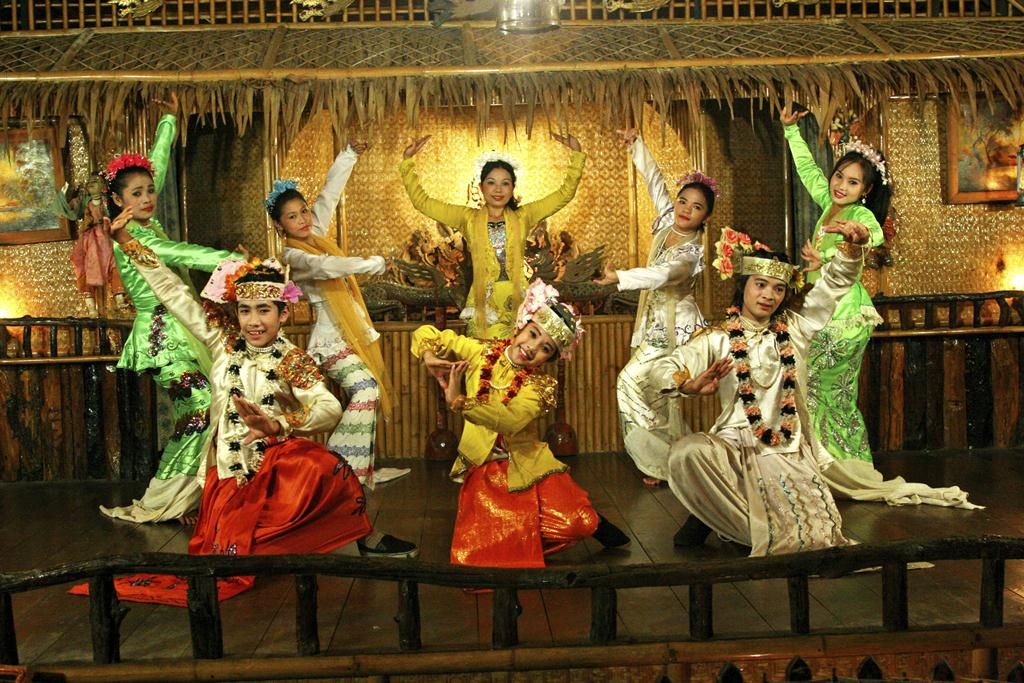
Mon culture and traditional heritages includes spiritual dances, musical instruments such as the kyam or "crocodile xylophone", the la gyan hsaing gong chime, the saung harp and a flat stringed instrument. Mon dances are usually played in a formal theater or sometimes in an informal district of any village. The dances are followed by background music using a circular set of tuned drums and claps, crocodile xylophone, gongs, flute, flat guitar, harp, etc.
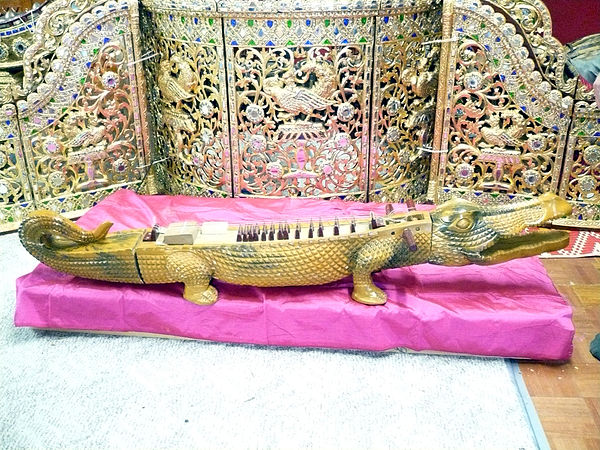
kyam is a crocodile-shaped fretted, plucked zither with three strings that is used as a traditional instrument in Mon state. The instrument's body is made of wood that is carved out on the underside like a dugout canoe. It has approximately 13 raised wooden frets that are diatonically rather than equidistantly or chromatically spaced. It has a carved crocodile's head and tail, as well as four legs. Its strings are tuned (from low to high) FCF.
MON
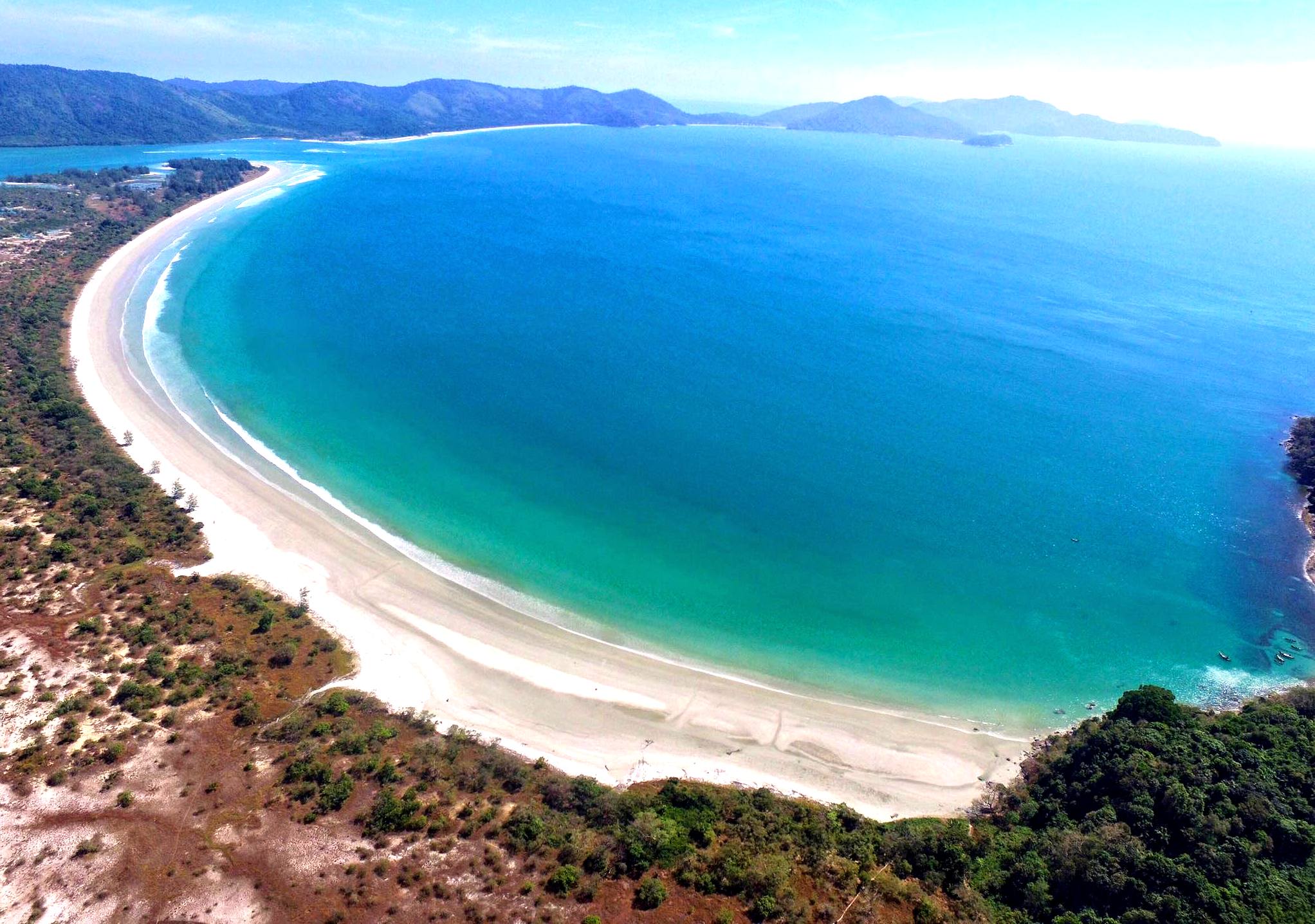
Mon is a state in Myanmar which covers a narrow strip of land located between Kayin state to the east and the Andaman Sea to the west. The first recorded kingdom of Mon is attributed to Dvaravati which prospered around 1024 AD till their capital was sacked by the Khmer Empire. The region was conquered by the British in 1824 after the first Anglo-Burmese War. The Mon people helped the British in the war, in return for promises of their own leadership once Burma is defeated. Thousands of Mons had migrated to Siam earlier but returned to their homeland during the British rule. However, the promise was never fulfilled and Mon existed as a colony of the British.
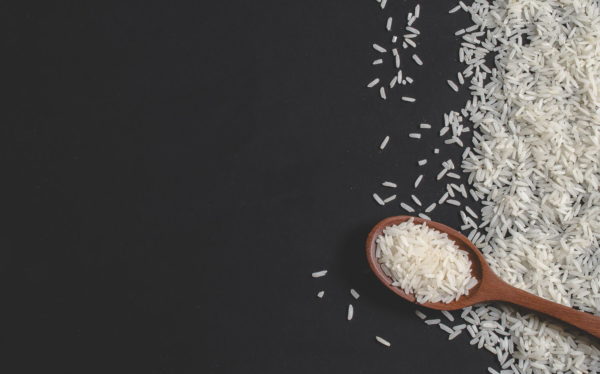
Mon State has a cultivated area of nearly 4,500,000 acres (1,800,000 ha), mostly under rice. The major secondary crop is rubber.
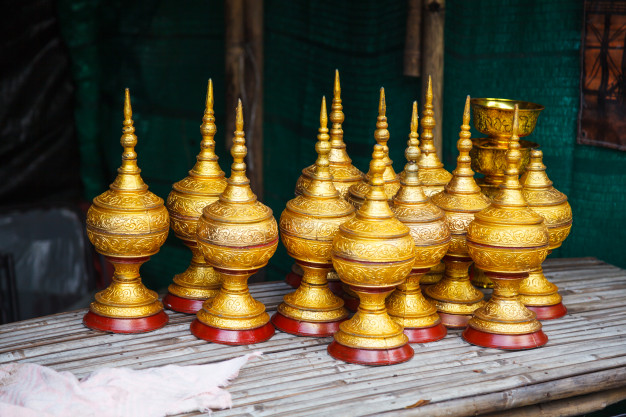
The vast majority of Mon are Theravada Buddhists and much of the Mon culture is influenced by Buddhism.

The Mon language is an Austroasiatic language spoken by the Mon people. Mon, like the related Khmer language, but unlike most languages in mainland Southeast Asia, is not tonal.
Kyaikhtiyo Pagoda
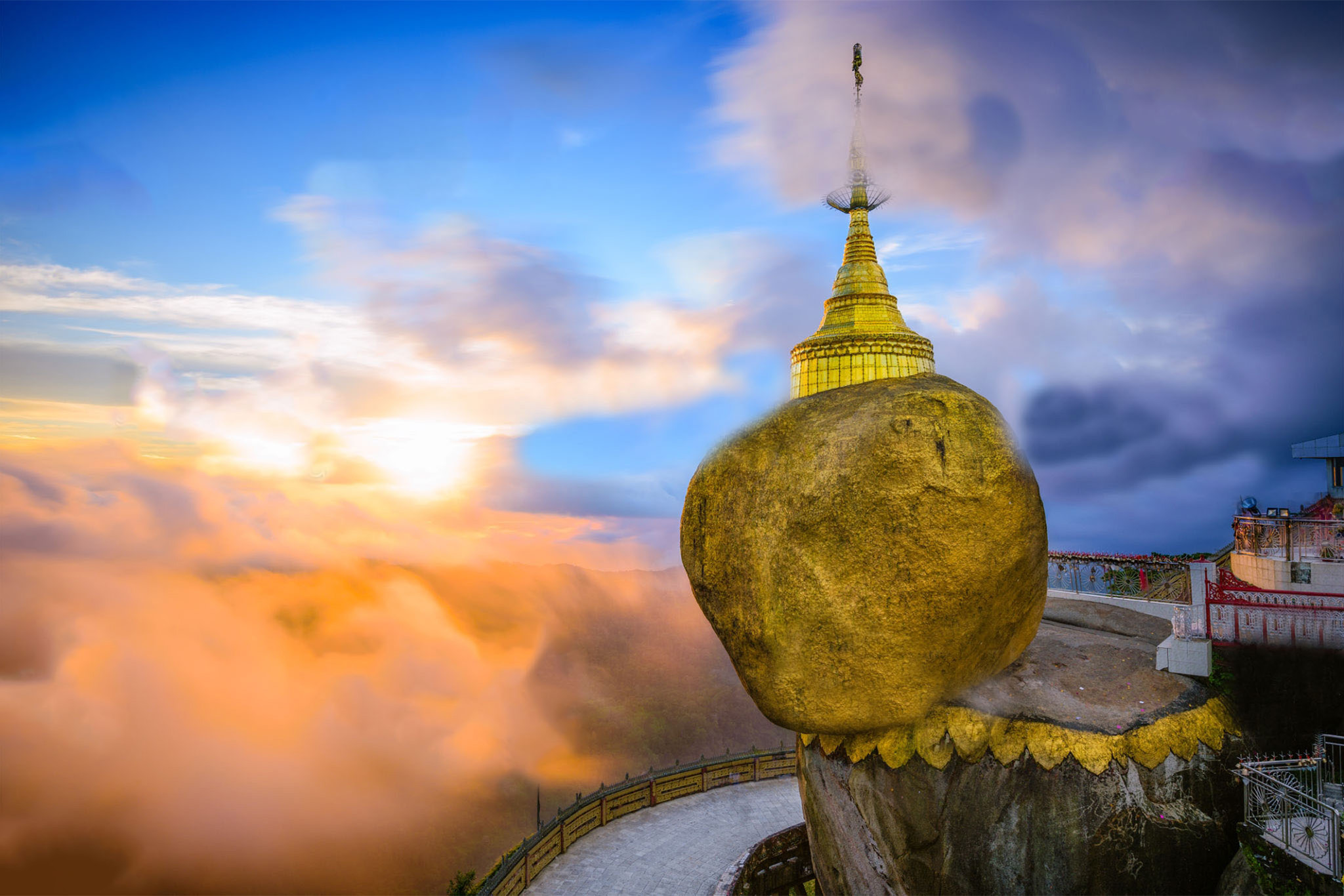
The Kyaikhtiyo Pagoda, also called the Golden Rock is one of Burma’s most sacred Buddhist sites. A massive boulder on the edge of a cliff with a pagoda on top of it enshrining a hair of the Buddha is an important pilgrimage site for Burmese Buddhists. The huge Golden Rock in the mountains North East of Yangon hanging over a steep cliff provides for an amazing sight. The rock that appears to be gold is actually a granite boulder that is covered with gold leaf applied to the rock by Buddhist devotees. The boulder is about 7½ meters high and has a golden pagoda called the Kyaikhtiyo Pagoda or Kyaik Hti Yo Pagoda on top of it where the Buddha’s hair relic is enshrined. The rock balances on the edge of a cliff and it appears like it can fall down in the valley below it at any moment. The boulder seems to hover over the ground, the contact area is very small.
Win Sein Taw Ya
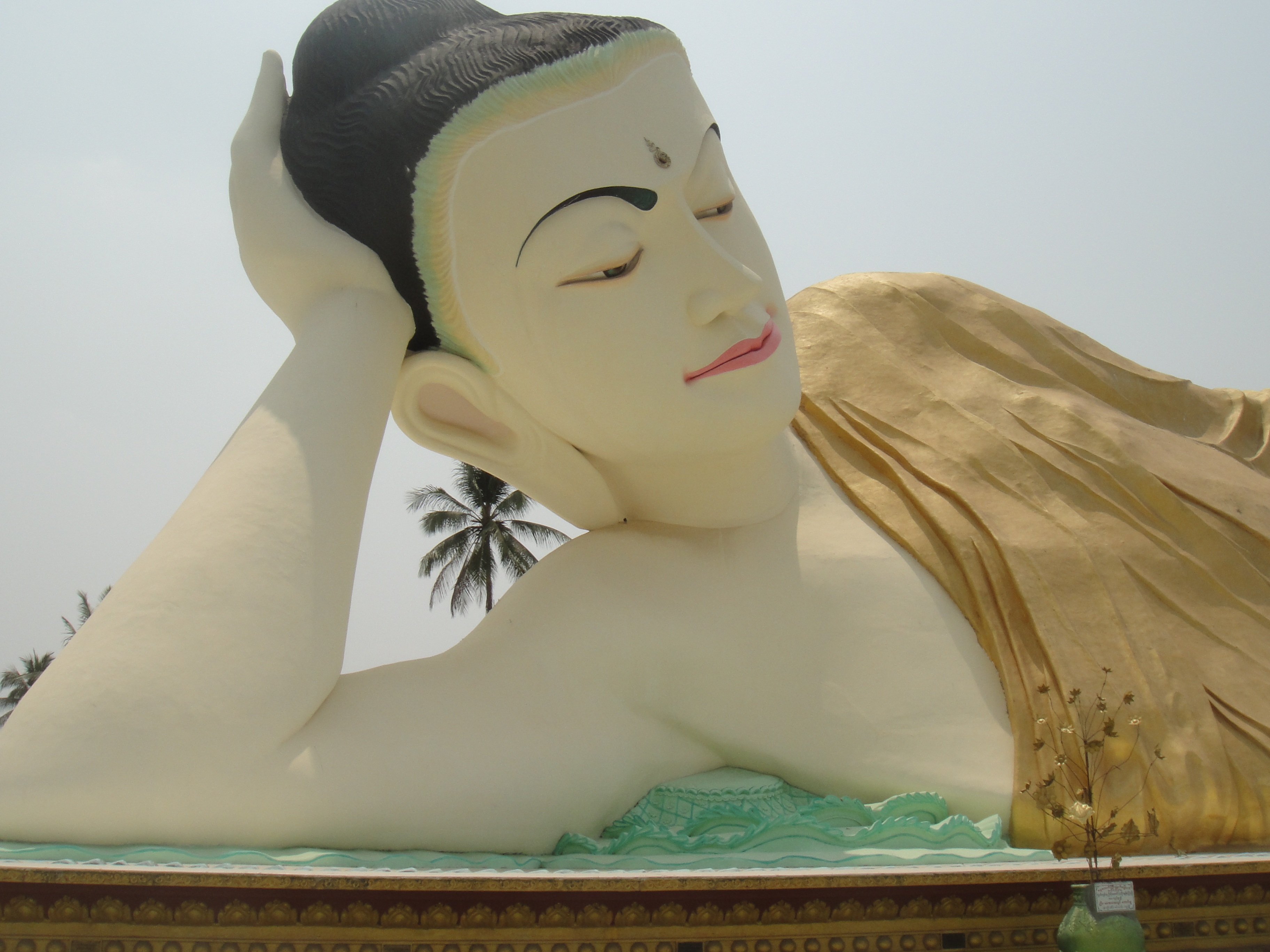
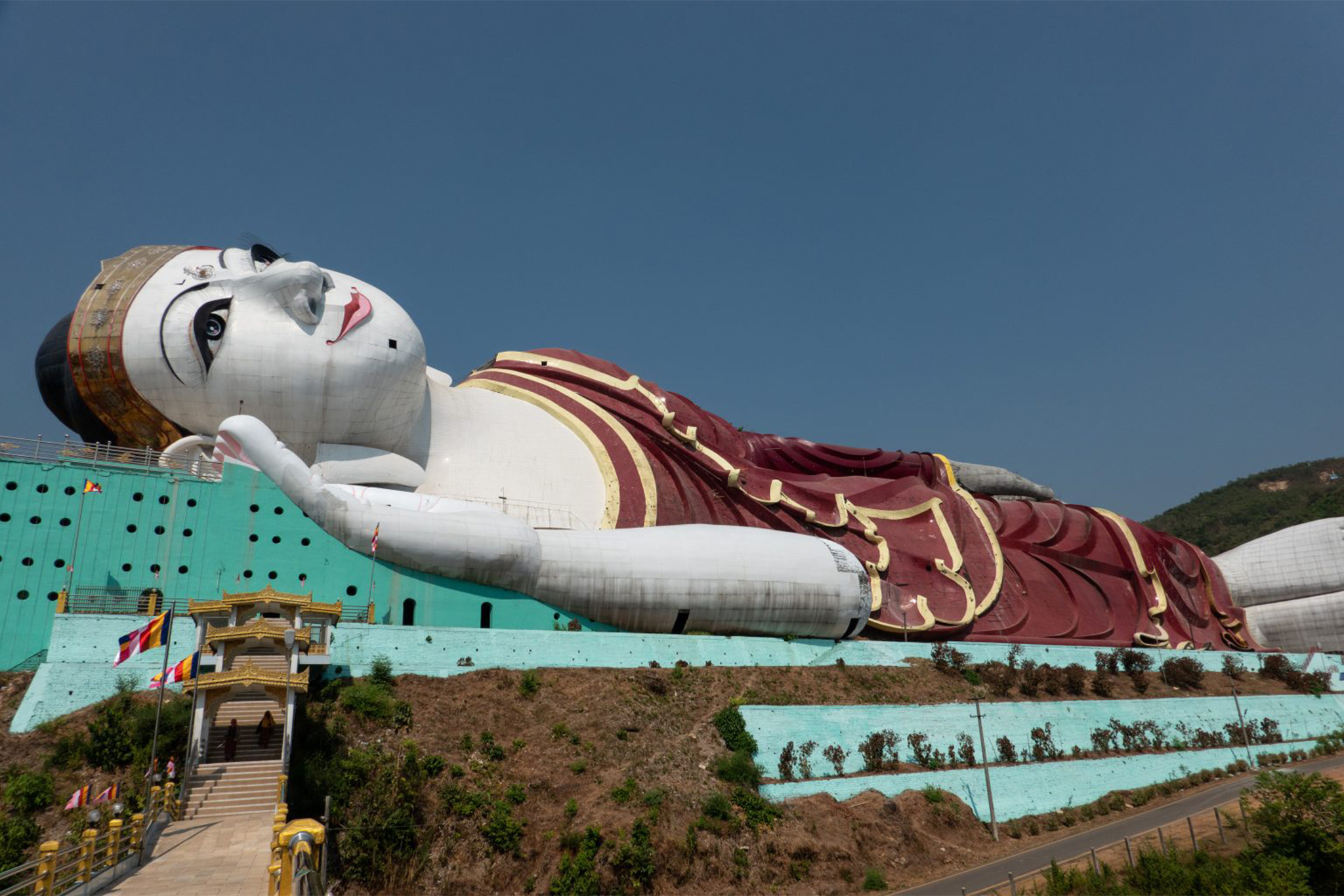
If you thought you’d seen some big old buddhas, just wait till you get a load of this one. Draped across a couple of green hillsides at Yadana Taung, around 15 miles southwest of Mawlamyine, and surrounded by a forest of other pagodas and shrines, is this 560ft-long reclining buddha. It’s easily one of the largest such images in the world. Many other stupas and standing buddhas dot the area, including 500 statues lining the road to the Win Sein Taw Ya. Aside from inflated buddhas, the area affords some gentle walks with wonderful panoramas. Every year around the first couple of days of February, a festival takes place here to celebrate the birthday of the monk who constructed the buddha. As well as a host of itinerant traders, monks and nuns, magic men and the odd hermit or two, the festival sometimes hosts a major kickboxing tournament.
Kyauktalon Taung Pagoda
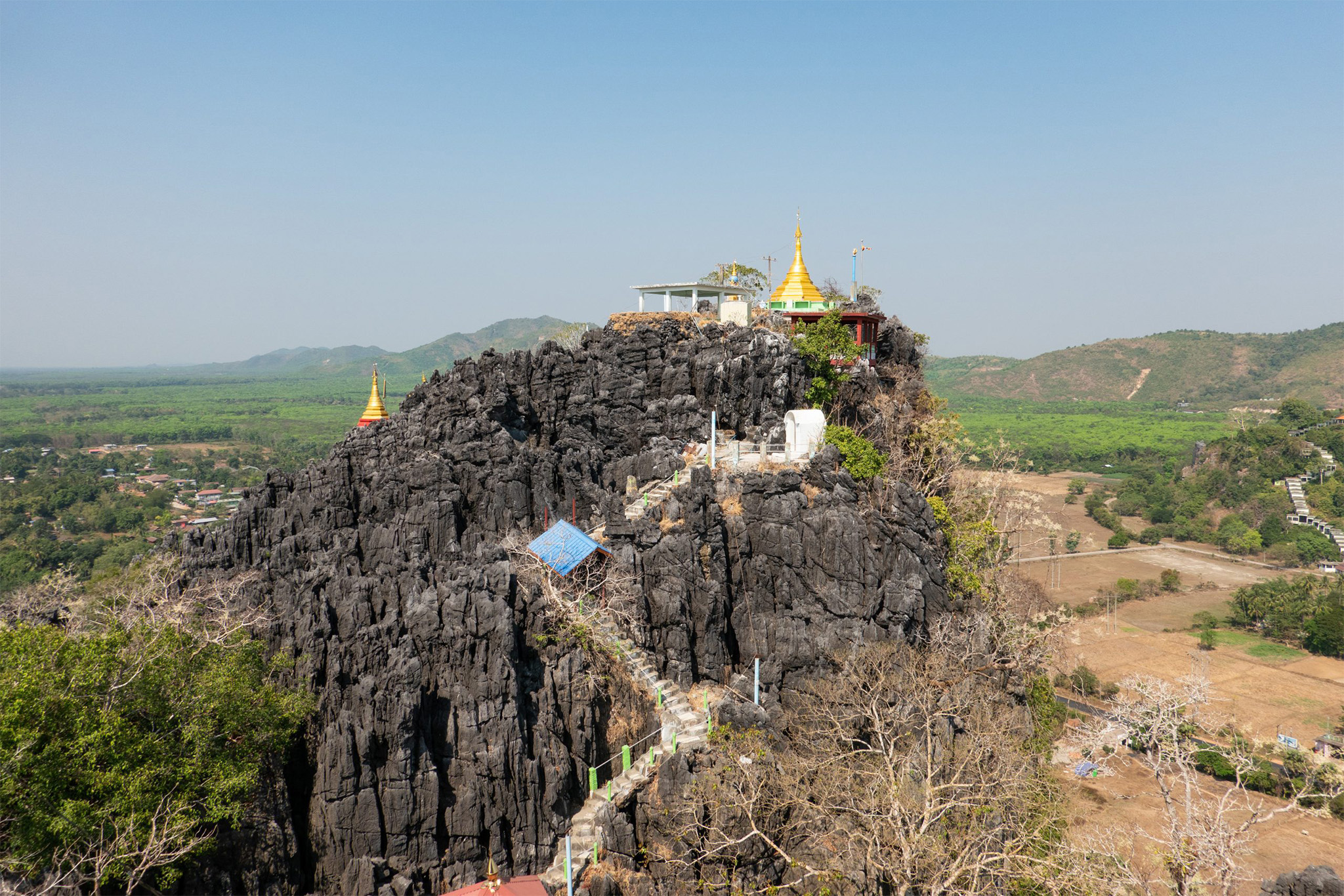
Mudon is the first major town south of Mawlamyine on the way to Thanbyuzayat, Kyaikkami and Setse Beach. Most travellers from Mawlamyine to these destinations would bypass Mudon altogether, preferring to stop 5 km earlier at Kyauktalon Taung and Yadana Taung, whilst visiting Win Sein Taw Ya, the largest reclining Buddha image in the world. Kyauktalon Taung is an interesting flat rock formation 300 feet in height with a Buddhist shrine situated on top. Although reminding you of Mt Popa in central Myanmar, the outcrop is geologically different being made of limestone rather than volcanic rock. As you are heading south towards Mudon from Mawlamyine, Kyauktalon Taung is located on the right hand side of the road however access to the shrine appears to be quite difficult requiring a very steep climb to the top.
Kyaikthanlan Pagoda
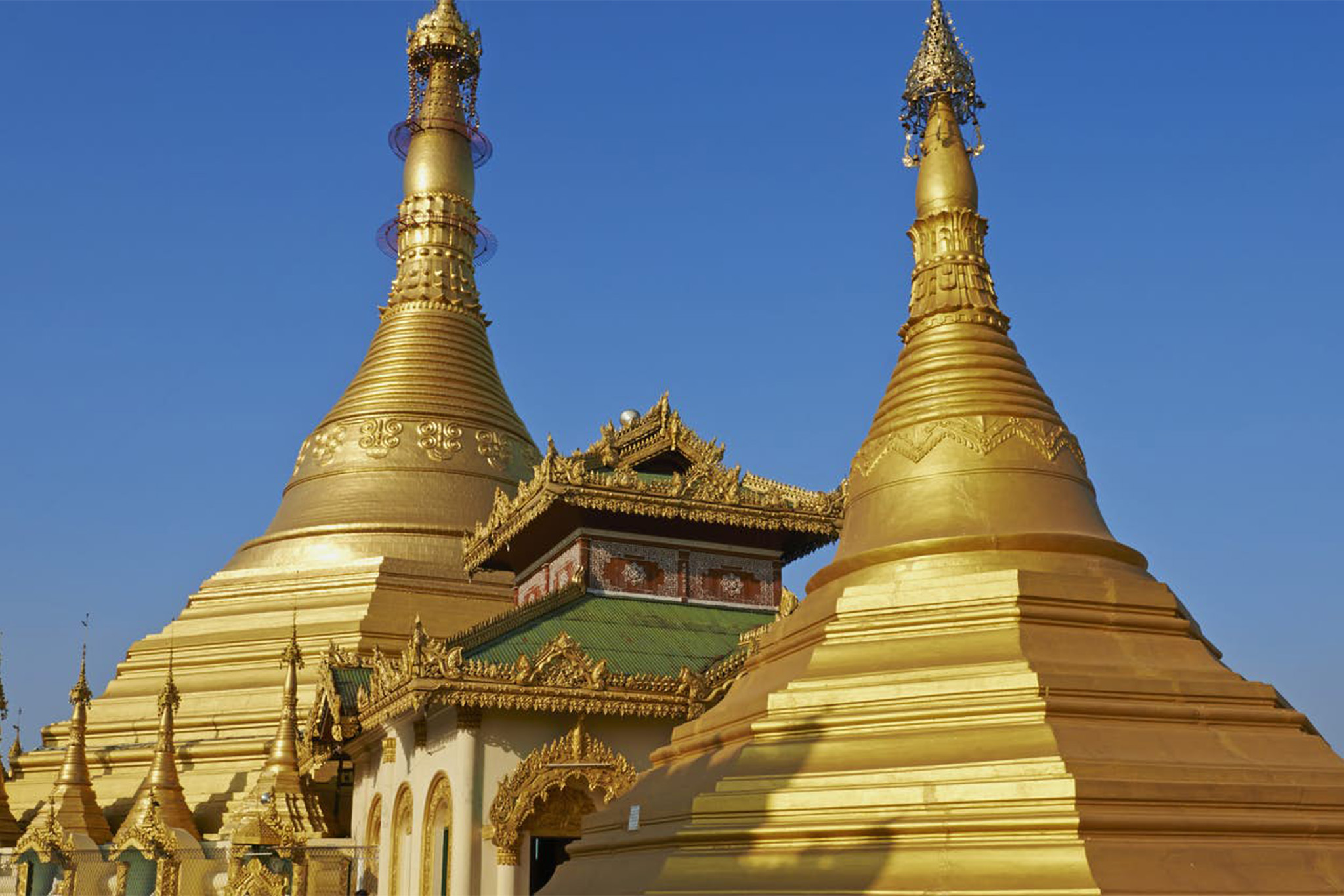
Kyaikthanlan Phayar (Pagoda) is the highest structure in Mawlamyine and stands 150 feet tall on the ridge overlooking the town centre. It can be seen for miles especially at night where its lighted brilliance dominates the skyline. From the top of the pagoda grounds, an excellent 360 degree panoramic view of the whole of the city can be seen. From this vantage point, Mawlamyine's British built prison strikes you immediately as you look westwards towards the Thanlwin river and the Gulf of Mottoma. Out to the east, you'll see the Dai Wun Kwin quarter and well as the Mawlamyine train and bus terminus in the Myay Ni Gone quarter. Kyaikthanlan Pagoda was built in 875 AD and enshrines the Tripitaka Buddhist manuscripts as well as a hair relic from the Buddha. The circumference at its base is 450 feet and is surrounded by 34 smaller Zediyan pagodas.
Local Specilities
Traditional Costume
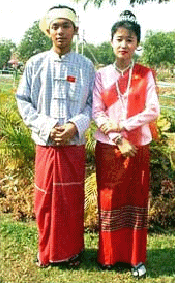
Mon men wear red checkered longyis, shirts without collars and traditional jackets. Mon women wrap their long hair around a comb and wear longyis and open-fronted blouses that button in the centre.
Wooden replicas of swords
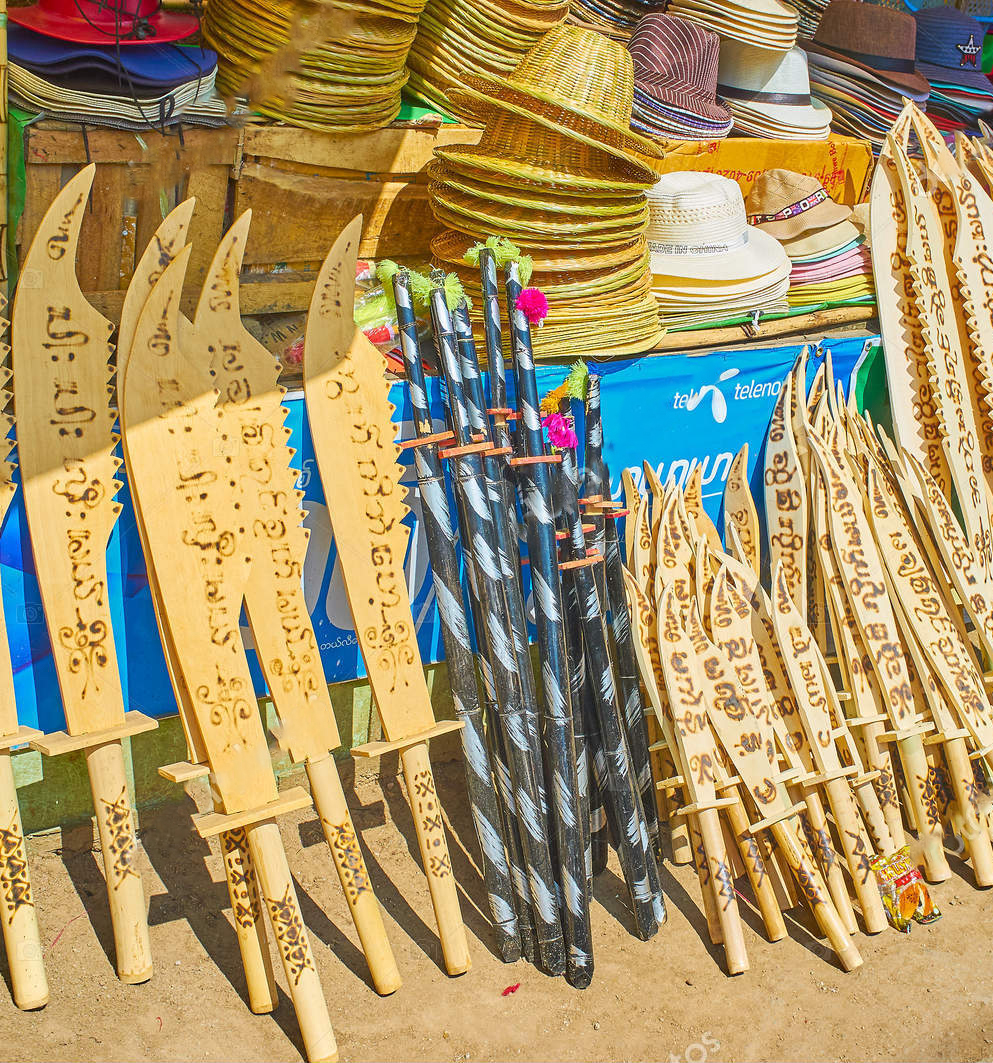
This is the souvenir that represents the medieval asian swords. The Local people in Kyaikhtiyo pagoda make them with woods and sell to the visiters as a part of their income.
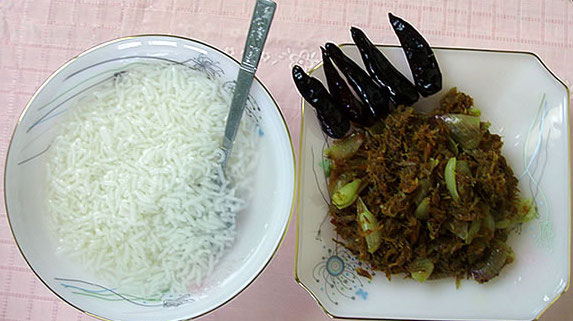
Thingyan Rice
This is Mon traditional recipe and not common to find in the market. Mon Thingyan rice is only cooked only in Thingyan time(about 5 days in mid of April). Mon people donate this dish to people who come to their donation booth.
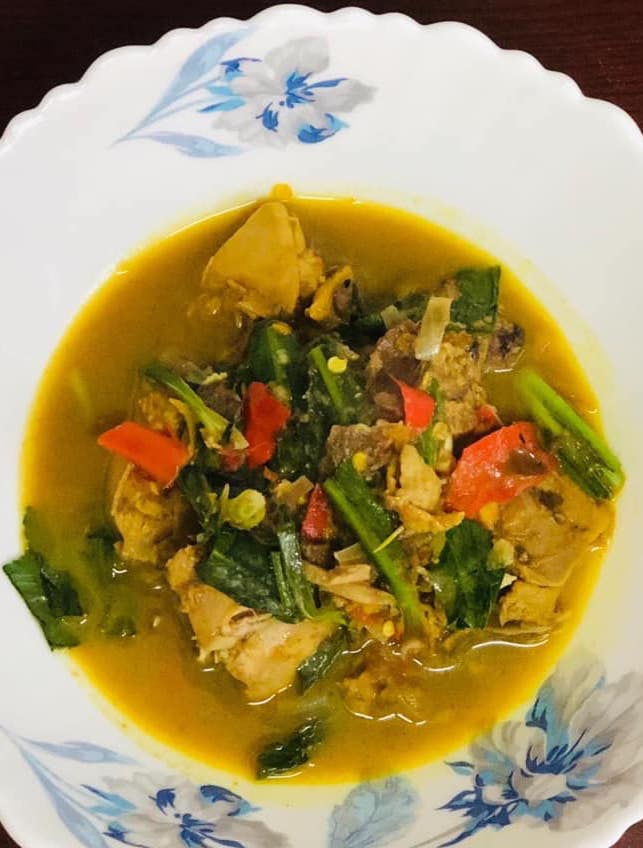
Chicken Mayan Pyar Chat
Most of the Mon dishes are include less oil, and taste good in sour and spicy. Chicken Mayan Pyar Chat is also this kind of dish and can also cook quite easy, and its ingredients have few calories so you won't get unwanted fat.
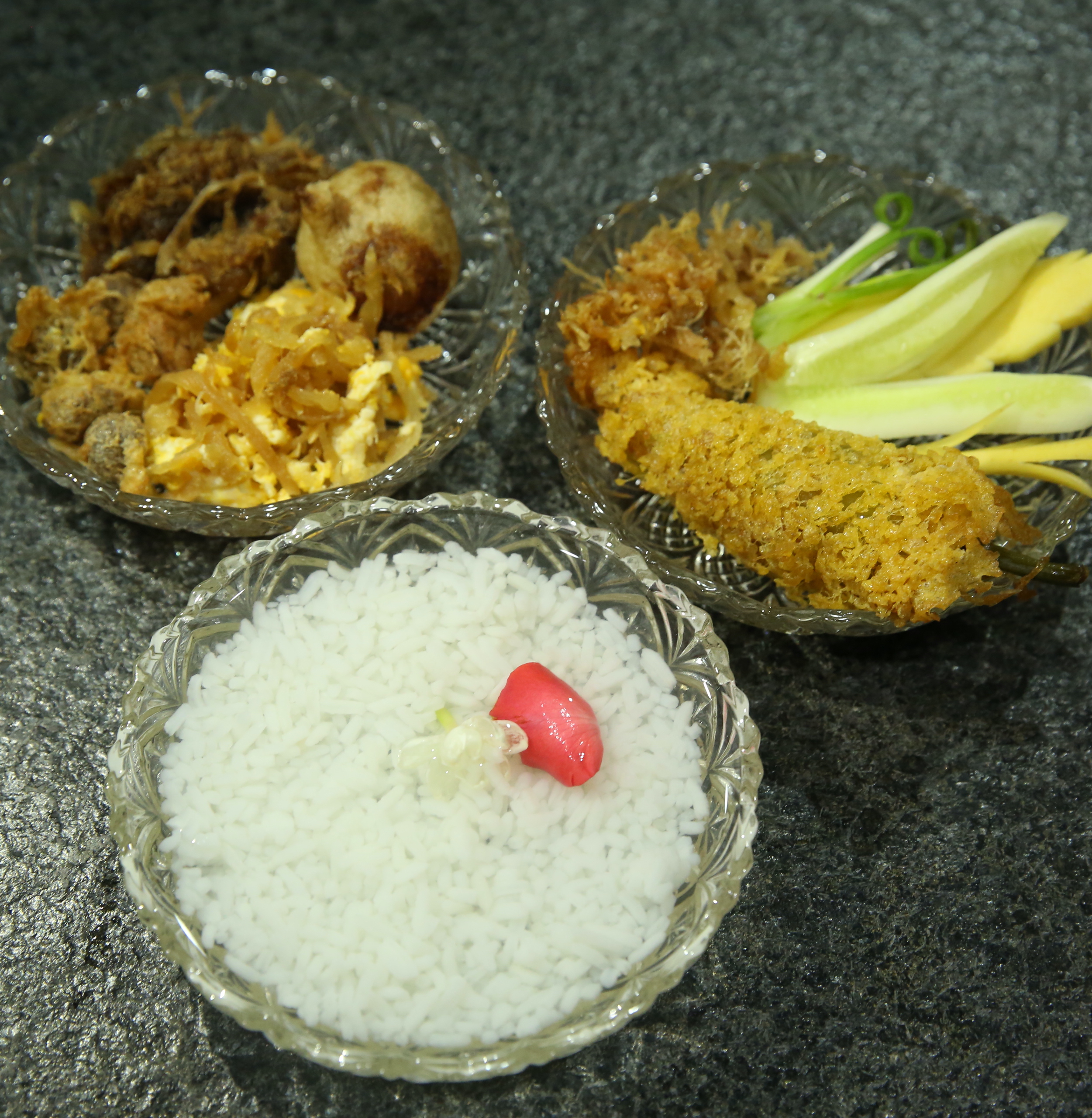
Khao Chae Rice
Khao Chae is "rice soaked in cool water". "Khao" means "rice" and "chae" means "to soak". Around the time of King Rama II, the recipe was adapted from a Mon dish and then modified. It was meant to be made and consumed in the hot season, from mid-March to the end of April.
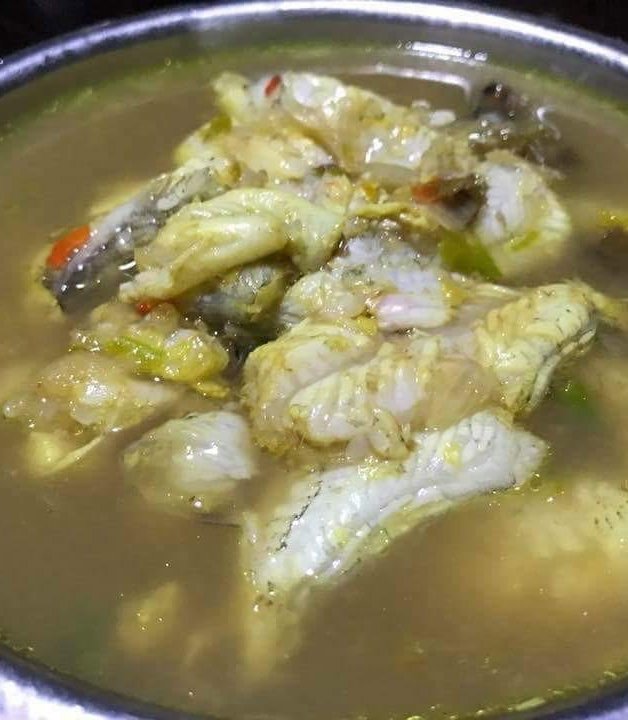
Spicy and sour fish curry
This curry is well known among Mon traditional that is without oil which can give you better taste and good for health.