The People
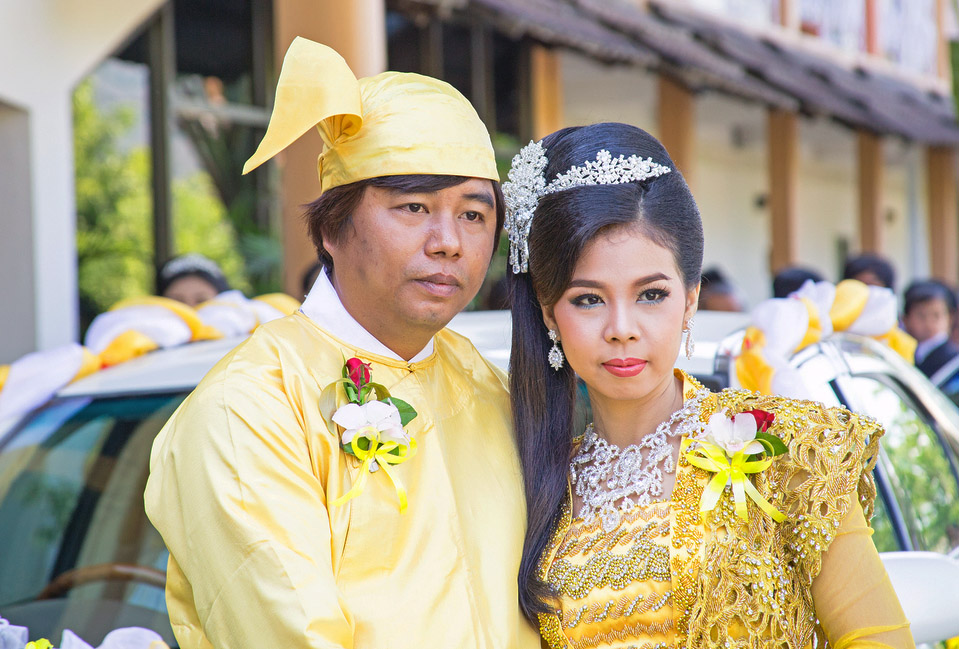
Myanmar’s majority group (around 40 million people, or two-thirds of the population), the Bamar have traditionally held sway over much of the country, particularly the fertile central plains and Ayeyarwady valley. Originally migrants from the southern China, the Bamar (or “Burmans”, as they were known in colonial times) were a wet-rice farming people, Theravada Buddhist by religion, whose tonal, Tibeto-Burman tongue – Burmese – has long been the national language.
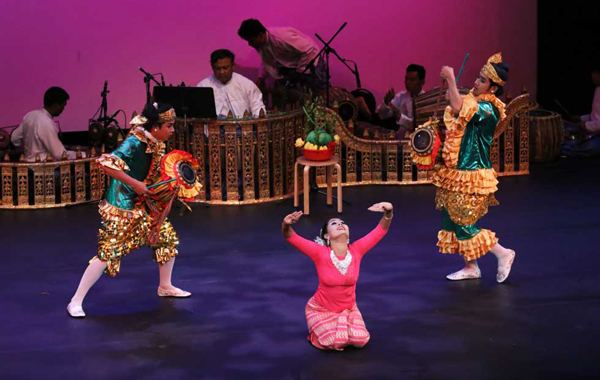
All-night performances, which combine melodrama, slapstick, traditional dance, and even pop music are called "zat pwe" in Burma. These seasonal events are staged in enclosed temporary bamboo theaters and are typically part of annual fund raising activities at pagoda festivals. The performers are traveling troupes, usually several dozen professional male and female dancers, musicians, comedians, and actors. These troupes travel widely throughout the country.
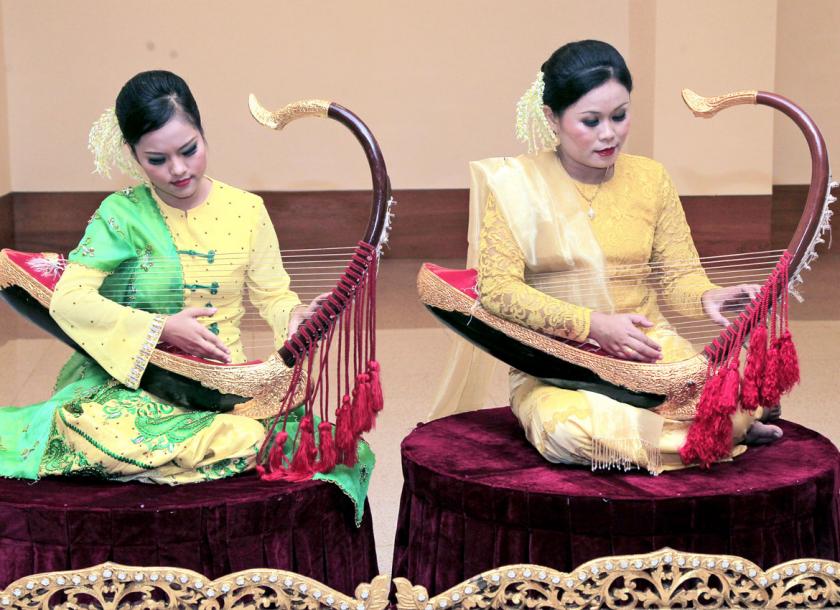
Traditional music from Burma is melodious, generally without harmony, and usually in 4/4 time (na-yi-se) or 2/4 (wa-let-se) or 8/16 (wa-let-a-myan). There are "the segments combined into patterns, combined into verses, combined into songs [that] make Burmese music a multileveled hierarchical system...The Burmese musician manipulates the various levels of the hierarchy to create the song..."
SAGAING
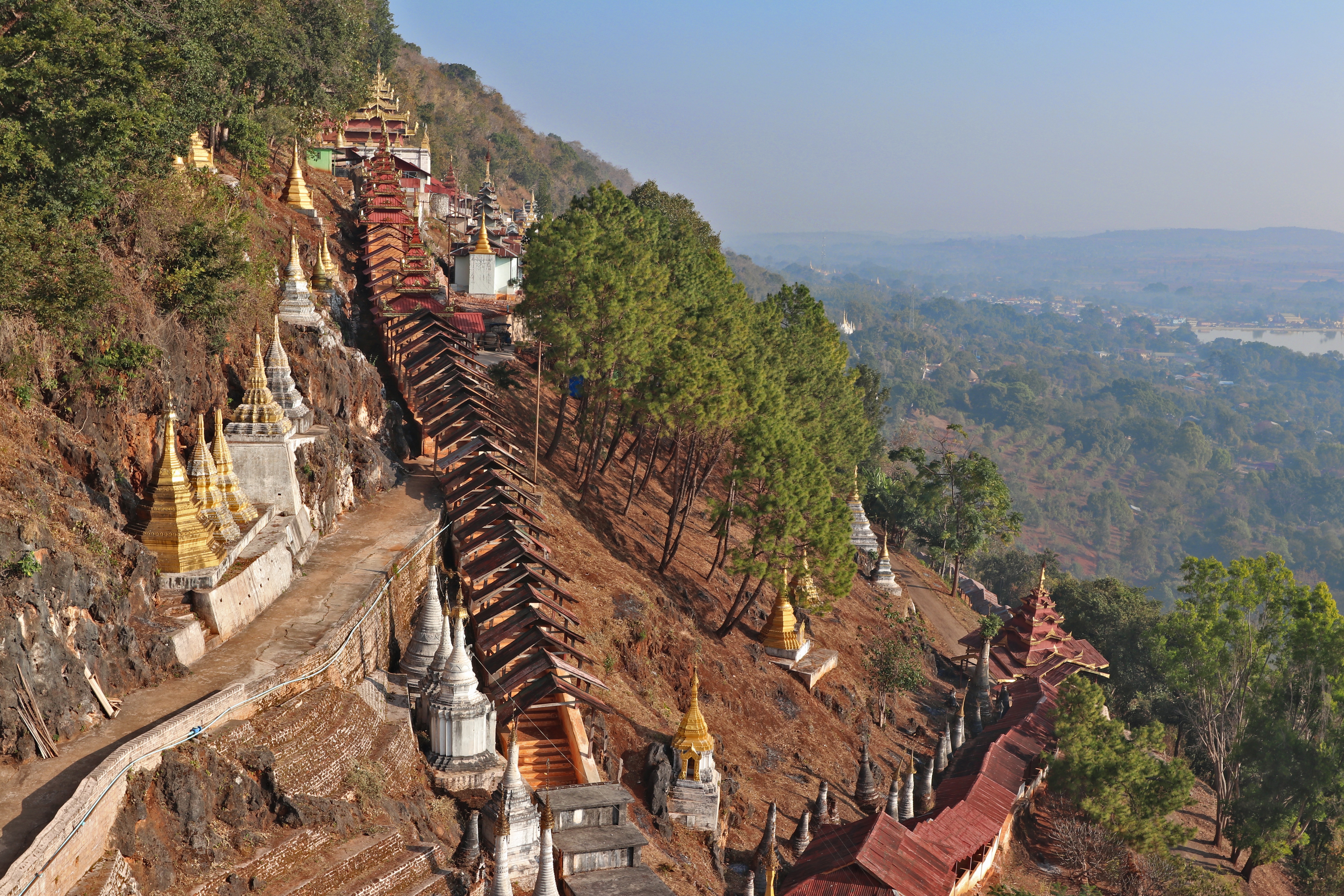
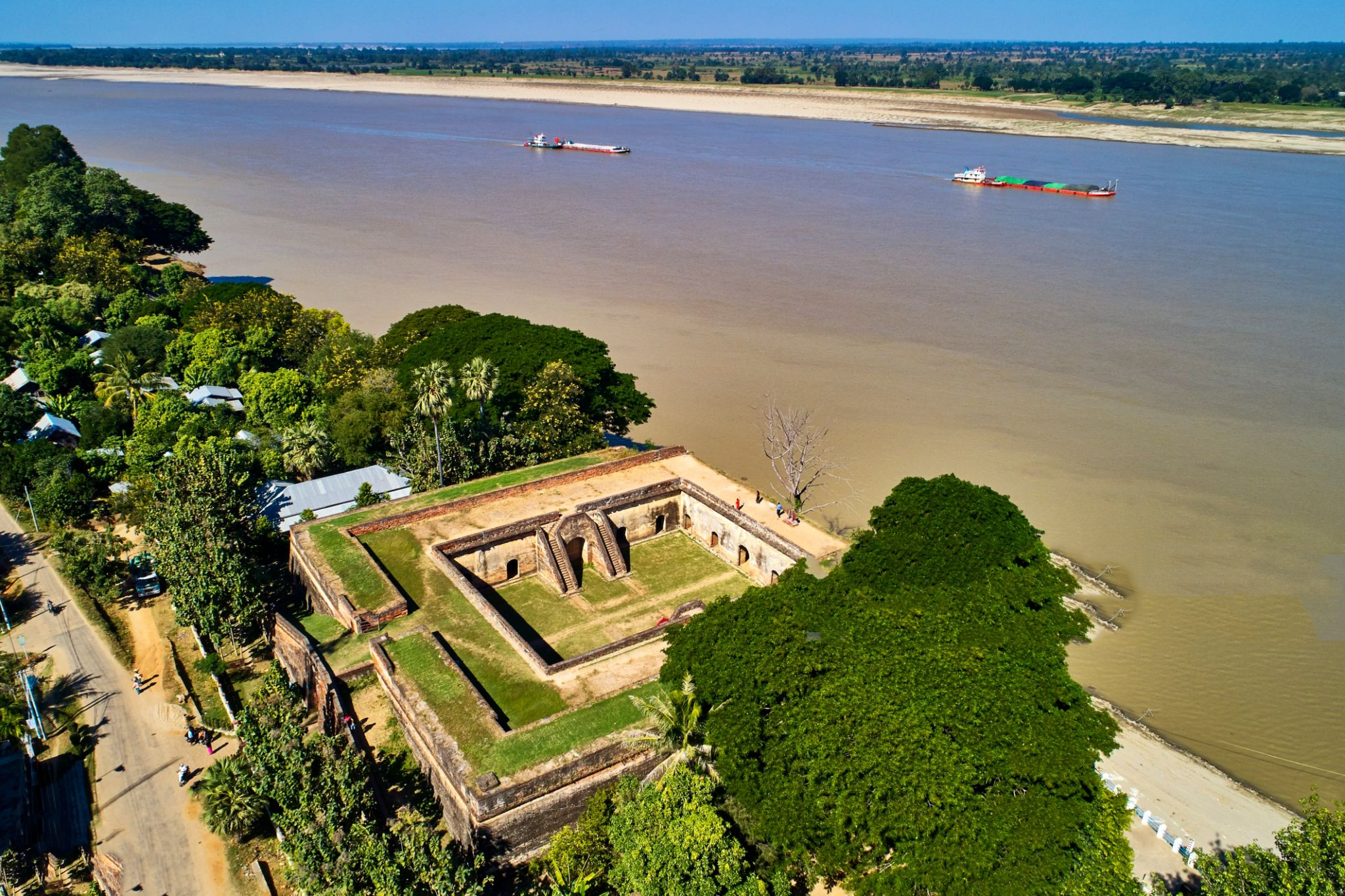
Sagaing’s classical name, Zeyapura, means the ‘city of victory’. The region, located at the north-western part of Myanmar, was the capital of the Sagaing Kingdom. It was one of the few kingdoms that managed to rise despite the fall of the Bagan dynasty and was also known to be the princes’ province during the Ava period. The region plays an important role as a religious centre and is known to have a great many. The Sagaing Hill, one of the main places for meditation in the country, is also known to have great meditation centres. Sagaing is home to numerous Buddhist monasteries and pagodas located on hills and parallel to the river, creating a magnificent view that would awe tourists visiting the area.
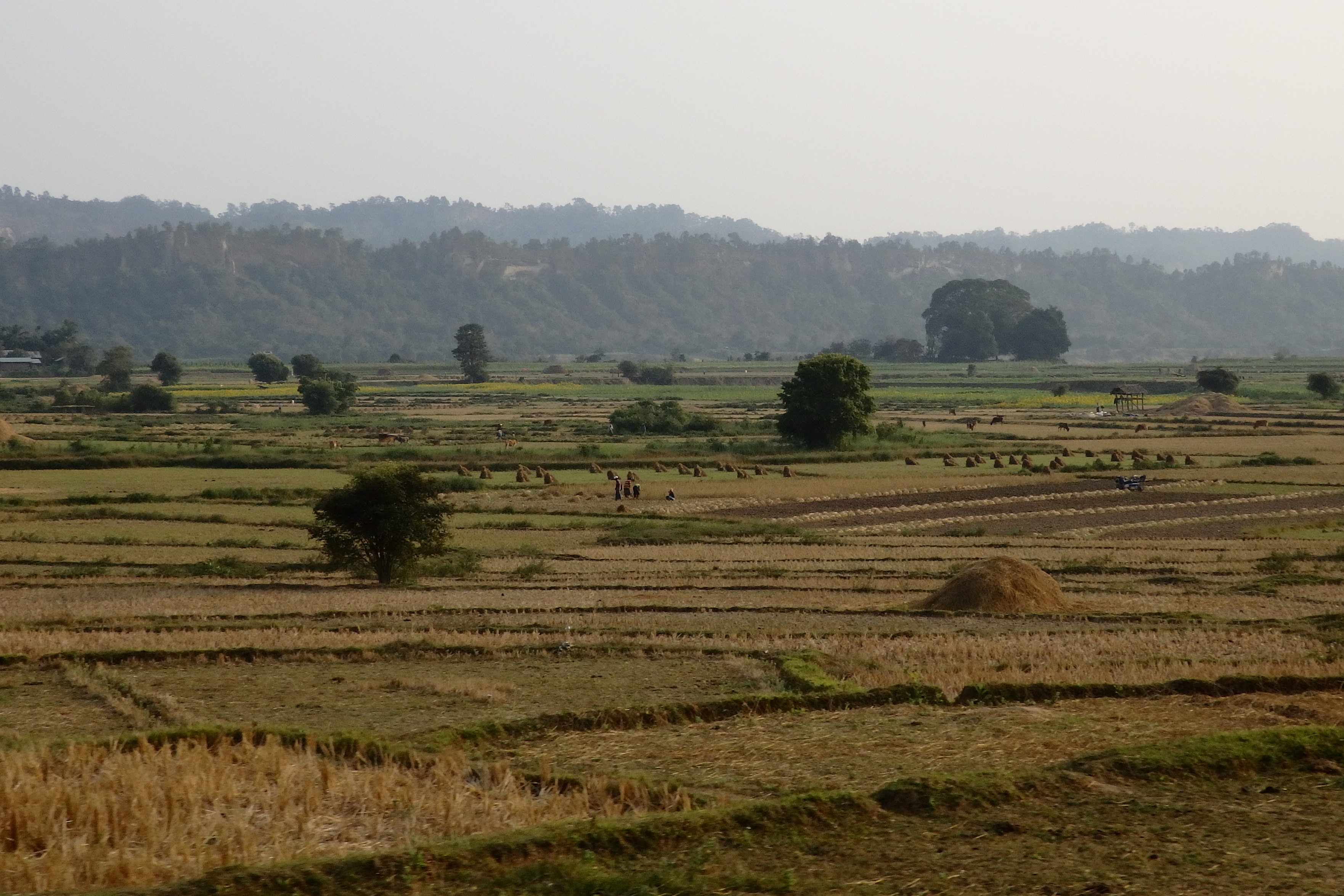
Agriculture is the mainstay of the local economy in Sagaing. Although the main common crop is rice, Sagaing is the main producer of wheat.
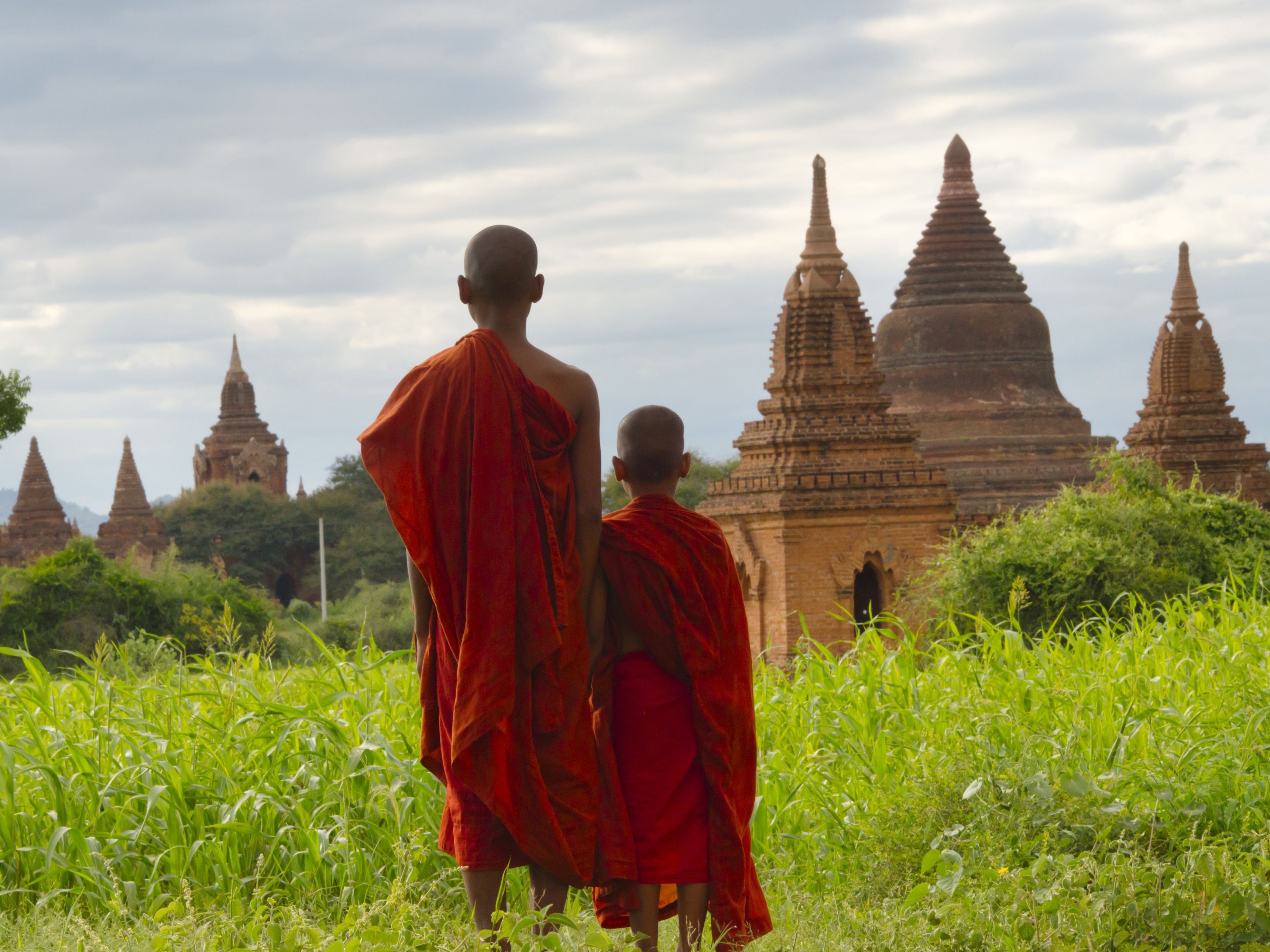
The majority in Sagaing region follow Theravada Buddhism.
The majority in Sagaing, Bamar people speak Burmese, a Sino-Tibetan language.
Kaunghmudaw Pagoda
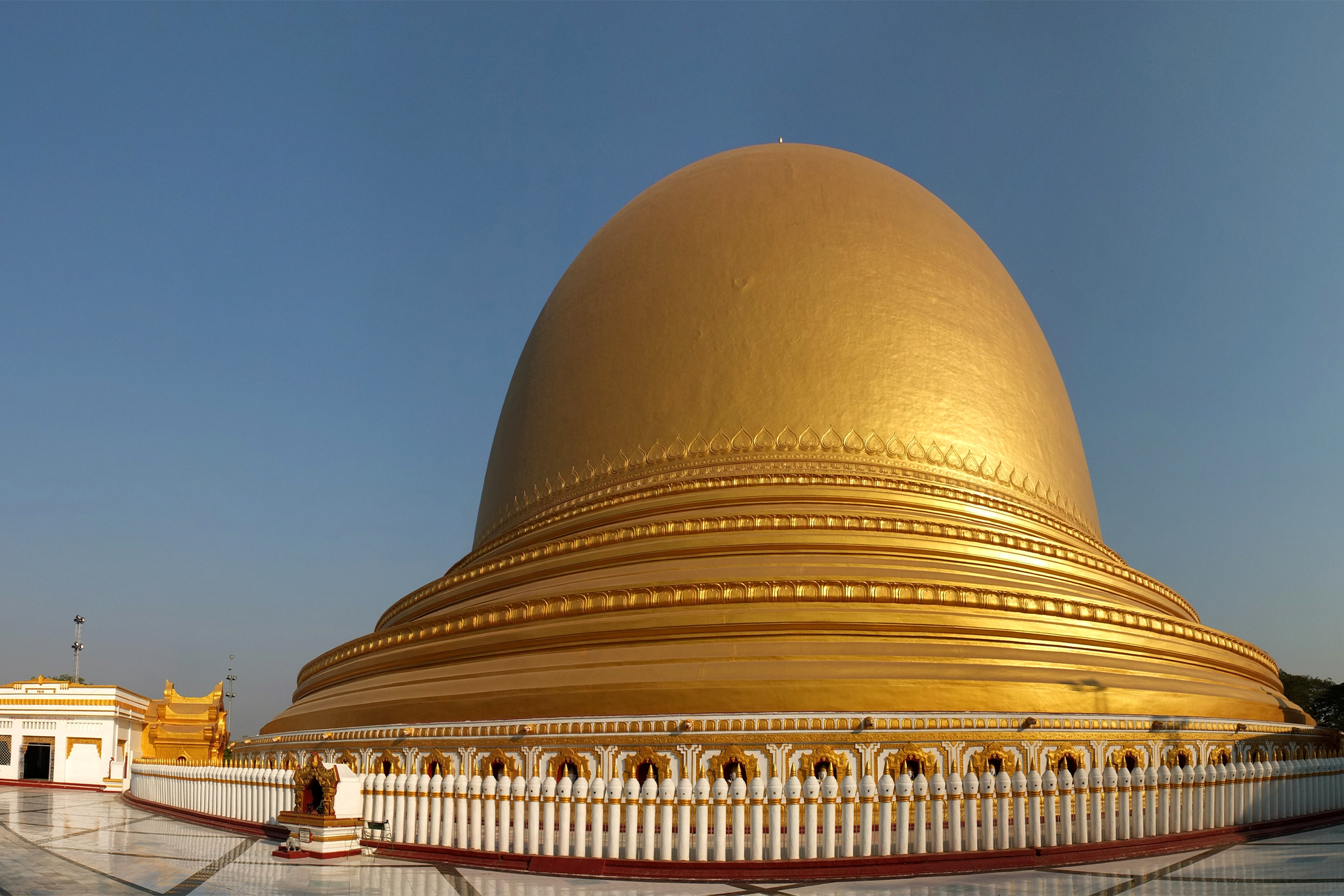
The Kaunghmudaw Pagoda took slightly over 12 years to build, from April 1636 to May 1648. The pagoda’s creator was King Thalun, eighth king of the Toungoo dynasty whose empire once included not only what is modern day Myanmar, but also most of Thailand, Laos, Cambodia and part of modern day Vietnam. The pagoda was built to mark the occasion of the royal city of Inwaa becoming the regional capital. The Kaunghmudaw Pagoda is a grand structure, 46 metres high with a circumference of 276 metres, topped by a ‘hti’ (gold umbrella ornament) which is 7.92 metres tall. Inset with the outer rim of the the structure of the pagoda are 120 statues. These statues are of ‘nats’, which are spirits worshipped alongside Buddha by many people in Myanmar, and ‘devas’, which are supernaturals beings worshipped in the Hindu religion.
Pahtodawgyi
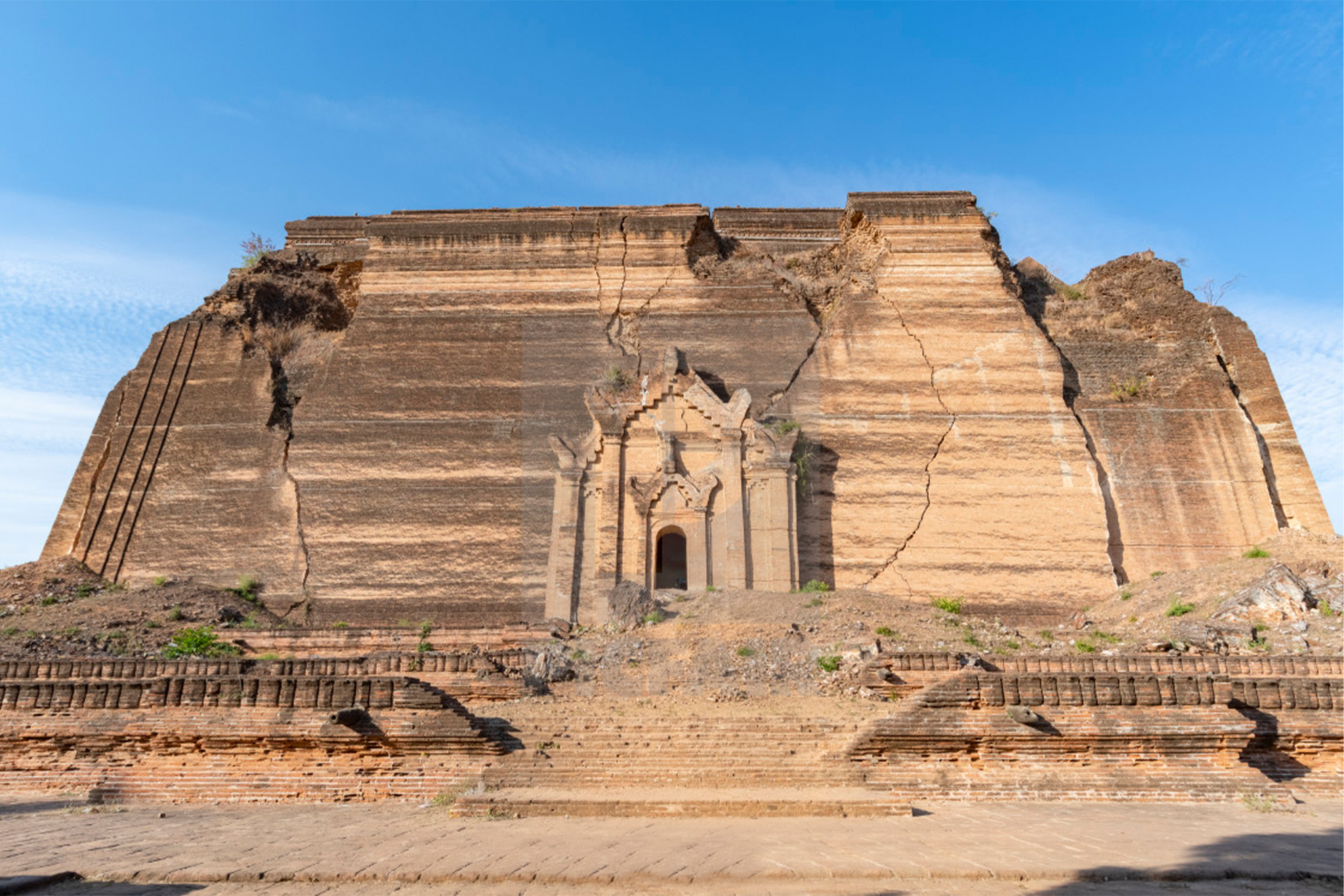
The Mingun Pahtodawgyi is an enormous "unfinished" pagoda located in Mingun, about 17 kilometers north of Amarapura, the kingdom's capital at the time of its construction. It was conceived by King Bodawpaya of the Konbaung Dynasty (r. 1782-1819) who initiated construction in 1791 to house relics of the Buddha including a tooth replica obtained from China. There is some doubt as to whether the pagoda was ever completed, as the structure was riven by a series of earthquakes beginning in 1821, and more disastrously, in 1839. Now covered in cracks, the abandoned monument attracts only limited use as a place of worship, though in terms of scale it outclasses every other monument in Myanmar, before or after.
Hsinbyume Pagoda
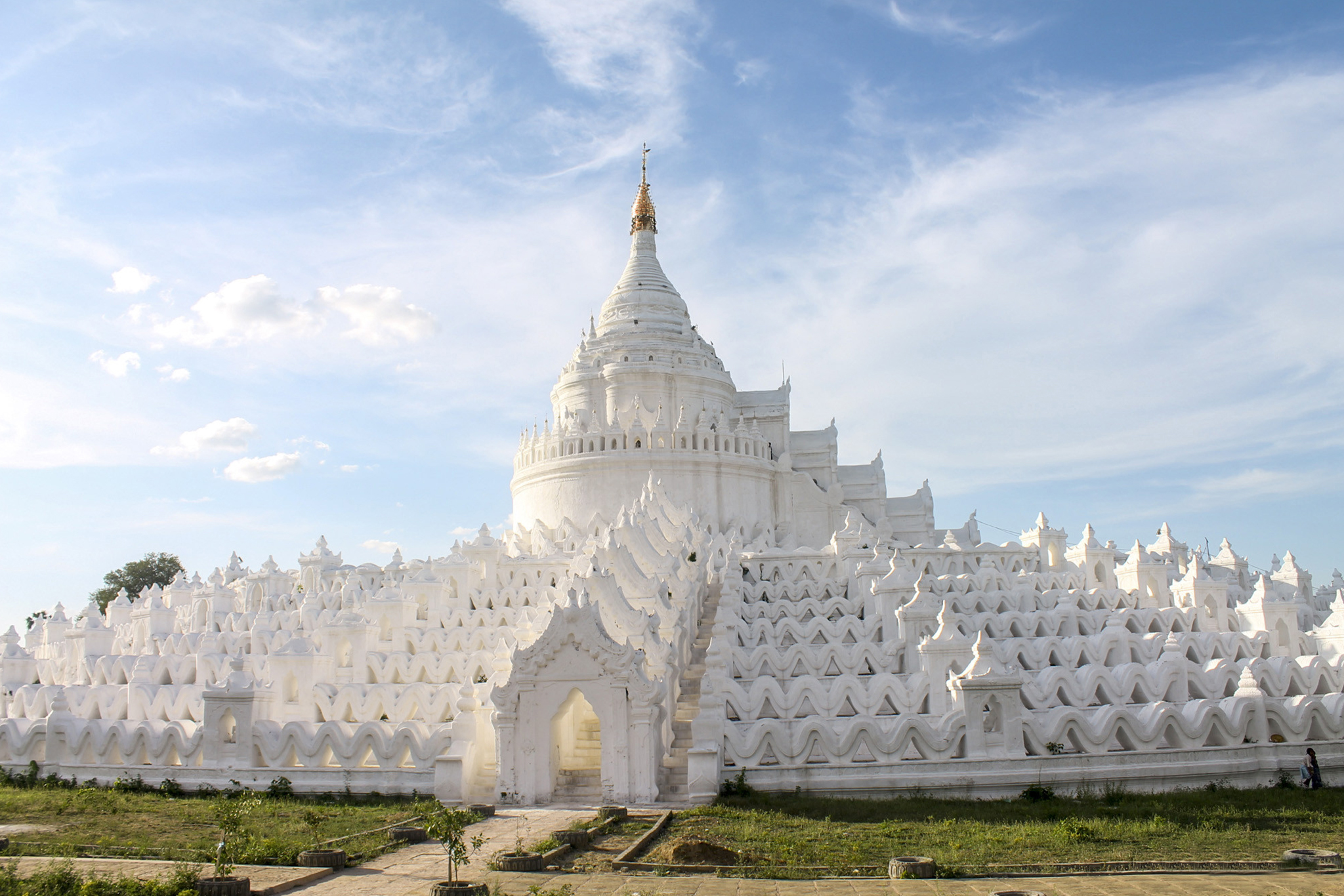
The Hsinbyume Pagoda is a beautiful all white structure on the banks of the Irrawaddy river just North of Mandalay. The pagoda that is also known as the Mya Theindan Pagoda is located in the Northern part of Mingun town a few hundred meters from the massive Mingun Pagoda. The all white pagoda was built in 1816 by Prince Bagyidaw, successor to the throne of King Bodawpaya, who built the nearby Mingun Paya. It was completed three years before the Prince ascended the throne in 1819 and became King of the Konbaung dynasty. The structure was dedicated to his first wife, Princess Hsinbyume, which literally translates to White Elephant Princess, who died during child birth. During the large earthquake of 1838 the Hsinbyume Pagoda was severely damaged. It was restored by of a successor King.
Thanboddhay Pagoda
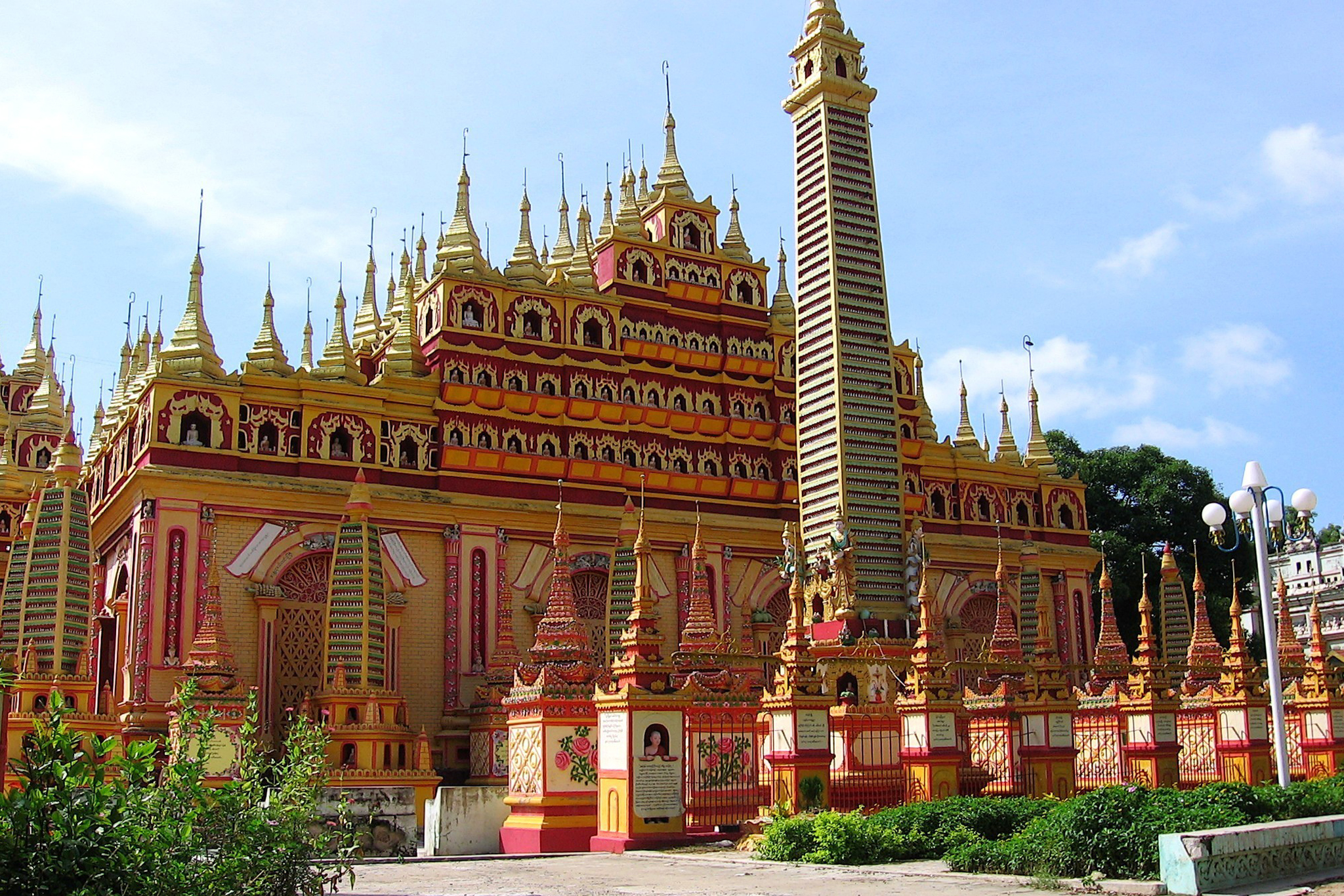
Thanboddhay Pagoda is a massive Buddhist complex in Monywa, Myanmar. It is a gilded world, brightly screaming out praise for Buddha through colorful celebration. Throughout the area, each pillar and tower of the Pagoda is carefully and completely covered with images of Buddha. From statues inside the pagoda, to miniatures climbing the sides of the building itself, there are 500,000 depictions of Buddha in total. Although it was originally built in the early 14th century, it was reconstructed in 1939, and is incredibly preserved in its golden form. Unlike many other temples in Myanmar, the entrance is not guarded by lions. Instead, two imposing white elephants stand out against their shimmering backdrop. Since its reconstruction, the pagoda has been one of the largest tourist attractions in Myanmar, drawing awe-struck tourists and pious religious visitors alike.
Pho Win Taung
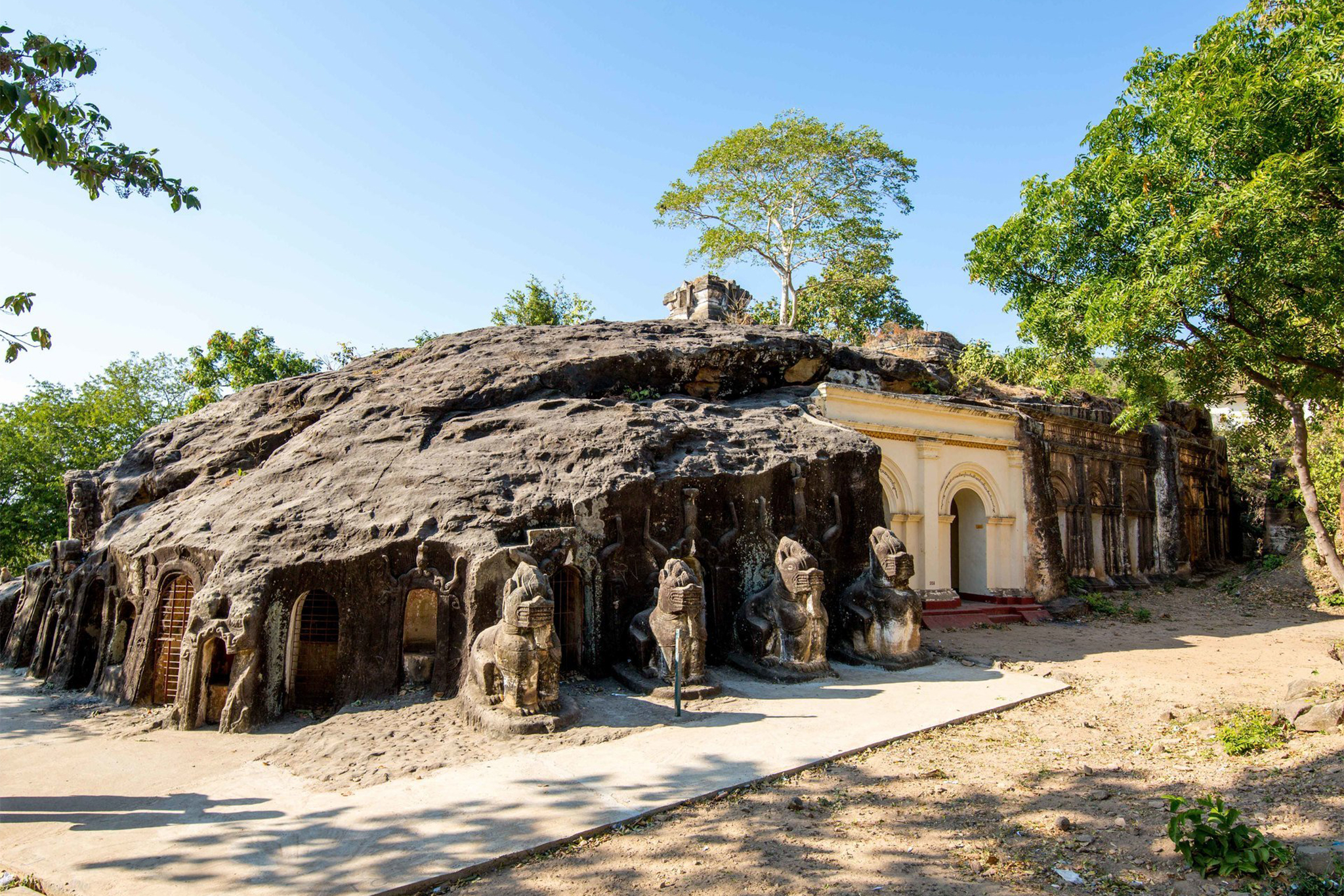
It is said, according to the local Burmese legends, that Phowintaung Caves was once the abode of an alchemist or a Zawgyi, who possessed supernatural powers. As the name of the alchemist who lived in these caves was U Po Win, the cave was named Po-Win-Taung in honor of the alchemist. According to Burmese folklore, Zawgyi U Po Win was so powerful that he could fly, survive under the water; cure manifold illnesses, turn base metals into gold; transport to any place within seconds, and relieve people from their miseries. Zawgyi U Po Win possessed the powerful philosopher’s stone which is known as the Dat-lone in the Burmese language. People living in the area also say that Zawgyi U Po Win practised Shamatha Meditation (Wikipedia Article) which helped the alchemist to attain Siddhi, or the ultimate state of renunciation. The statues and paintings which are there in the Phowintaung caves dates back anywhere between the 14th and 18th century.
Local Specilities
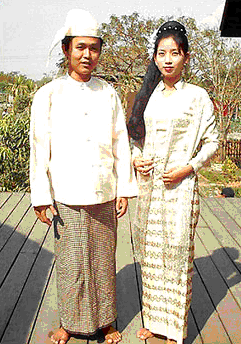
Traditional Costume
Bamar men dress in longyis, shirts without collars and traditional jackets. They also wear ready-made turbans with a wing-cloth standing to the right. Bamar women wear longyis and blouses with an opening in the front, which are buttoned either in the centre or on the side. They wear their hair in top-knots and drape lace shawls.

Kho Taung Mont Di
A type of Myanmar noodle salad inspired and originated from the Kho Taung village in Sagaing. It is similar to Nan Gyi Thoa and tastes really good. There are add-on fritters, jengkol, and fish cakes to go with the salad if you want. The jengkol is sticky and sweet; the fish cake tastes even better because it is not fried but boiled in the soup.
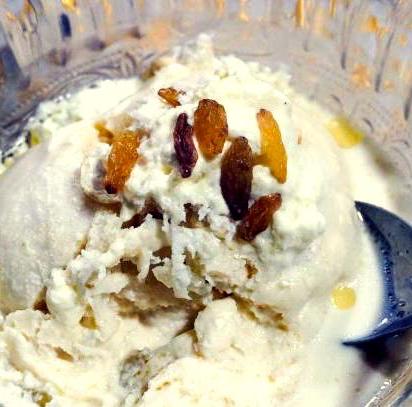
Creamy Baozi
Made with cow milk, evaporated and condensed milk, butter and sugar, it’s really delicious. Cashew nuts, raisins, pumpkin seeds, and coconut are also included in this version.
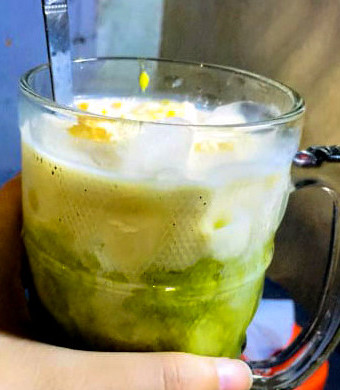
Avocado Juice
Here the avocado Juice (not blended) is topped with milk cream on top. It tastes really sweet and the price is reasonable.